The Cell Dynamics and Fragmentation lab at 
We study how single cells move and fragment in complex environments using microfluidics. We bring tools and concepts from physics and chemistry into cell biology to study the cell boundary.
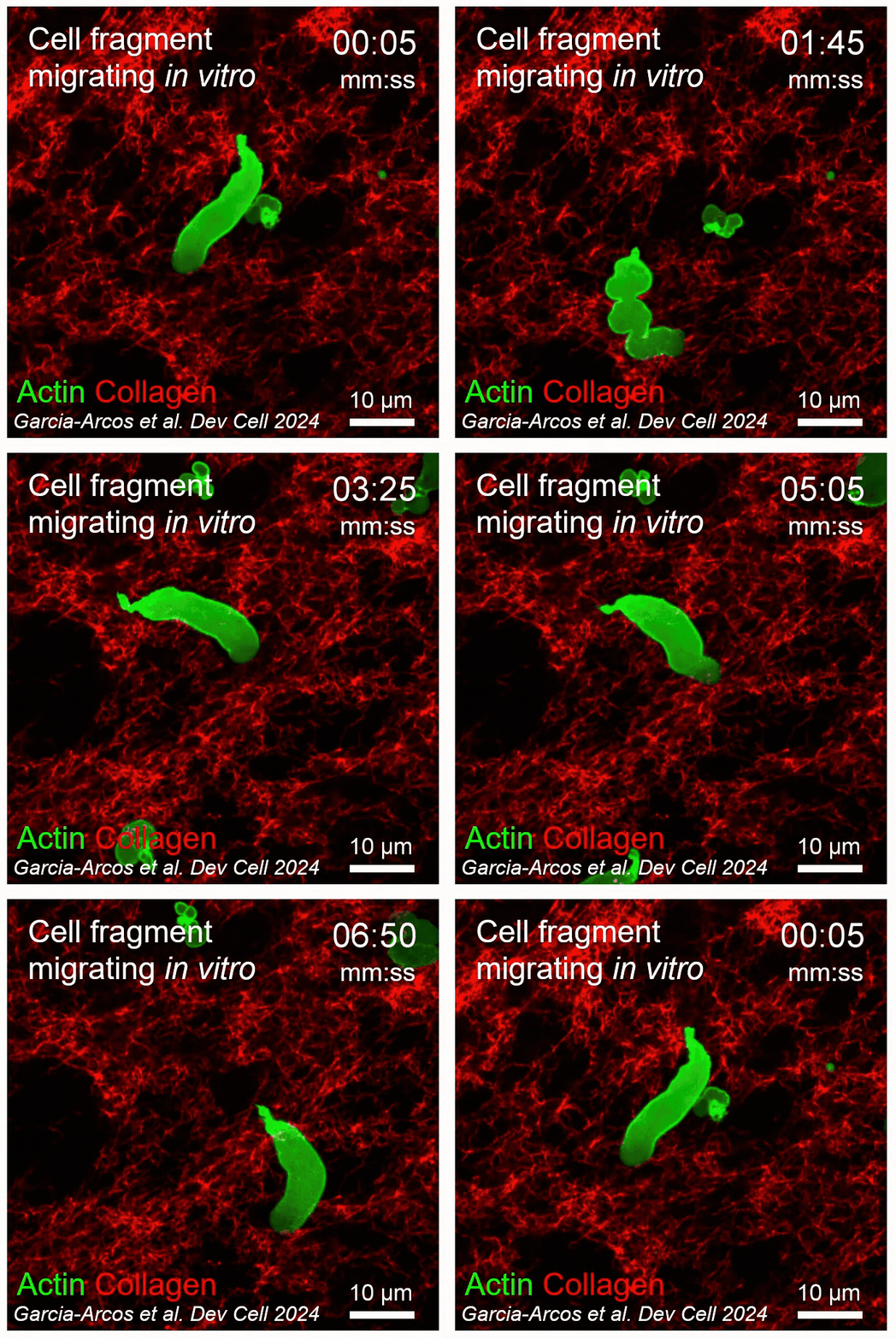
What is cell fragmentation?
Cell fragmentation refers to the process by which a a part of the cell splits forming a cytoplast through a combination of actomyosin contractility and localized membrane scission. Unlike apoptotic bodies or smaller extracellular vesicles, these large fragments can move on their own and are enriched in specific molecules.
Fragmentation occurs in diverse contexts: from cancer cells navigating confined environments to megakaryocytes during platelet formation. These fragments can carry signals, metabolites, or organelles that influence surrounding cells. Our research aims to uncover the molecular and physical principles that generate these fragments, understand what cellular material they carry, and determine how they shape communication, metabolism, and disease progression.
The lab is headed by Juan Manuel García-Arcos. We are generously hosted at the unit of Pierre Gönczy at the School of Life Sciences of the École Polytechnique Fédérale de Lausanne (EPFL) and funded by an Ambizione grant from the Swiss National Science Foundation.
Research topics
Our main focus is to understand how physical and molecular principles control cell behavior, with a particular emphasis on membrane mechanics and cell fragmentation.
People
We value curiosity, clear thinking, and careful experimentation, and we welcome motivated students and researchers who want to grow in a supportive environment.
Publications
Check here our publications and the data and code archive on Figshare.

We are hiring!
We will hire a technical assistant / lab manager mid-2026. We are also open to host master internship projects and any motivated PhD candidate or postdoc who is motivated by science and interested in our research topics. Come join us in Lausanne, Switzerland!