Alongside my research, I paint and draw. Over the past years, the work has grown into three series: fields of order in nature, landscapes, and scientific illustration.
Order in nature
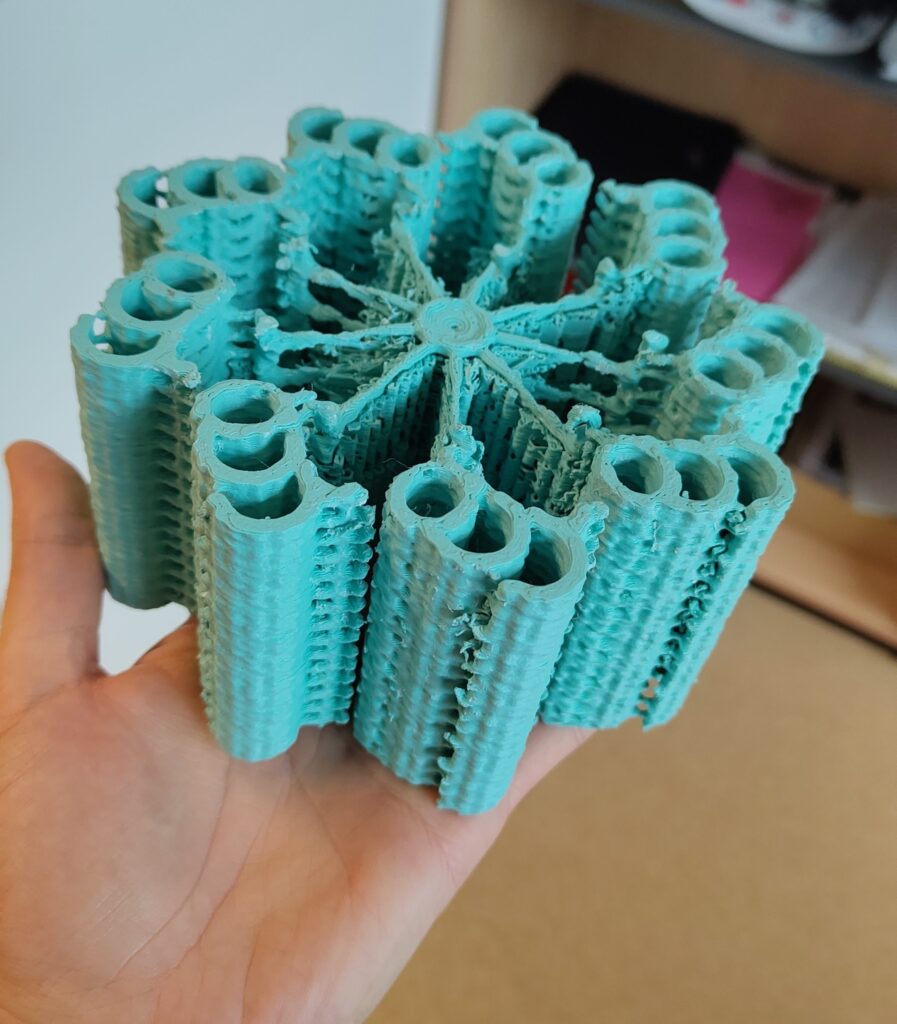
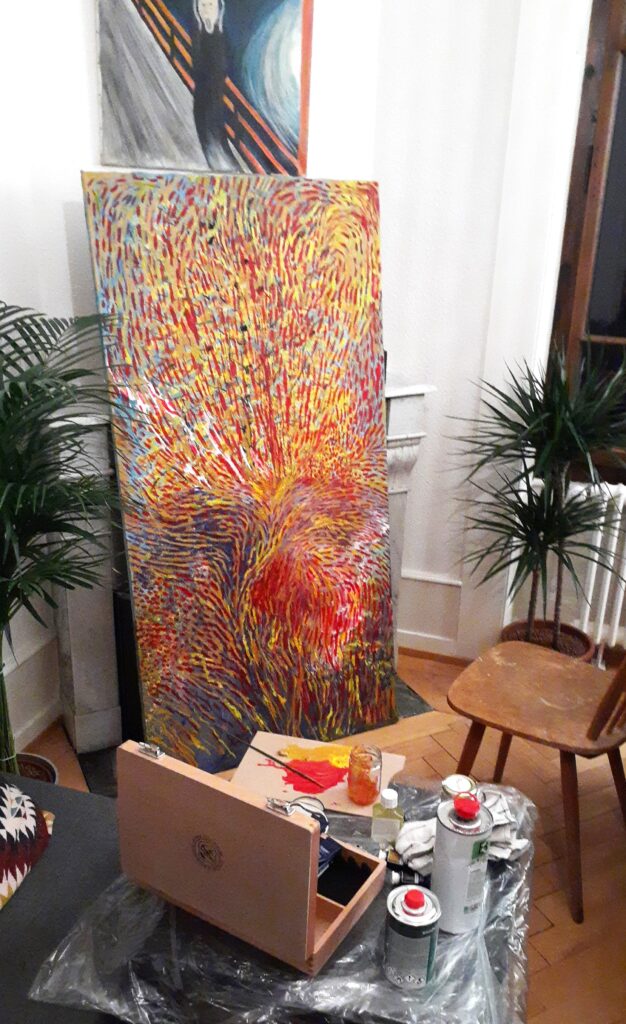
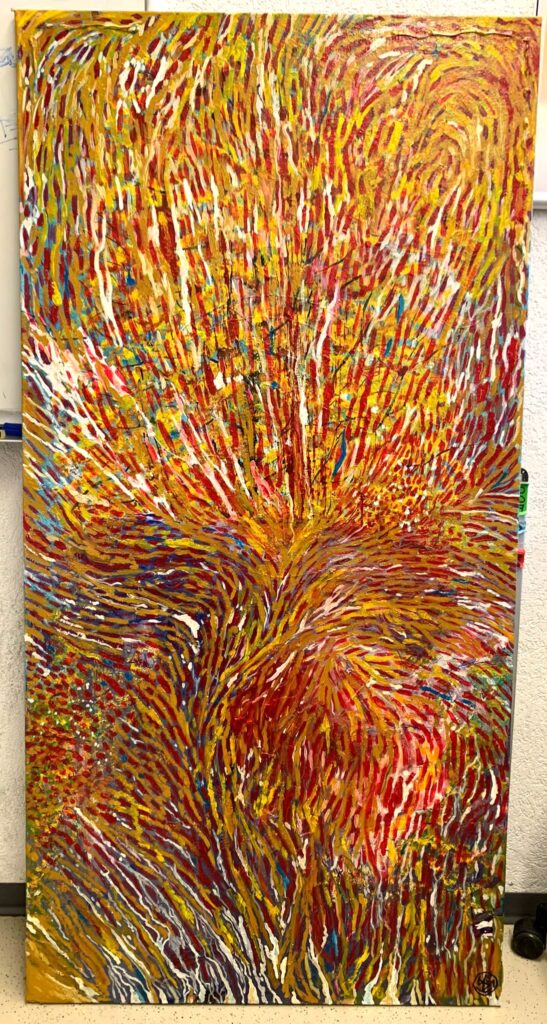
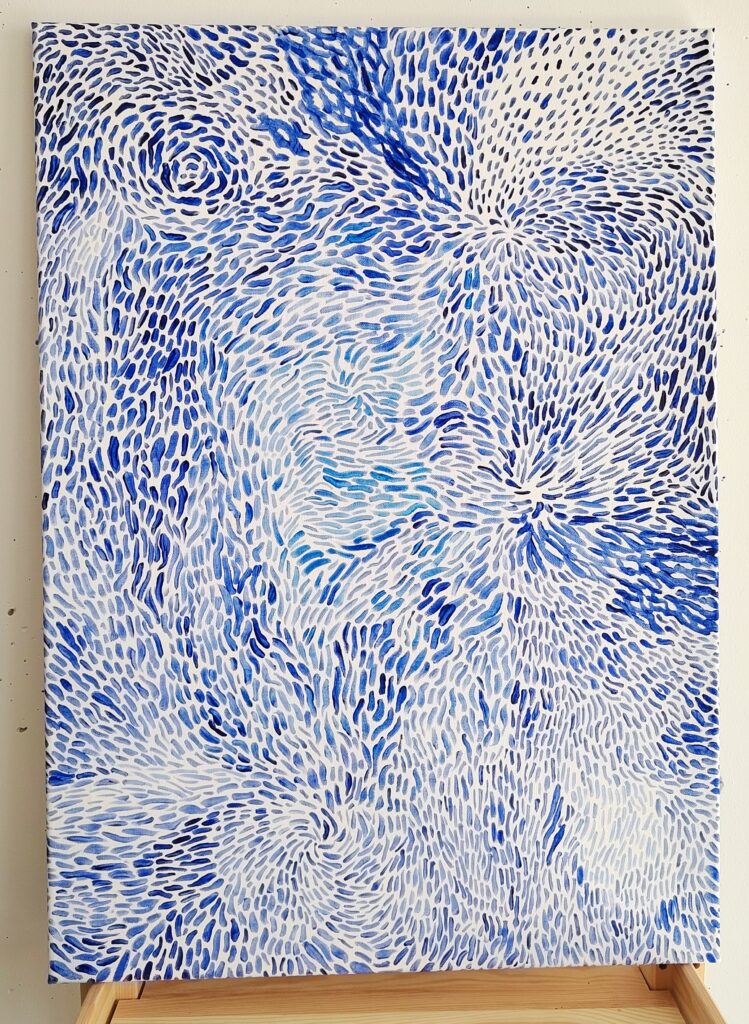
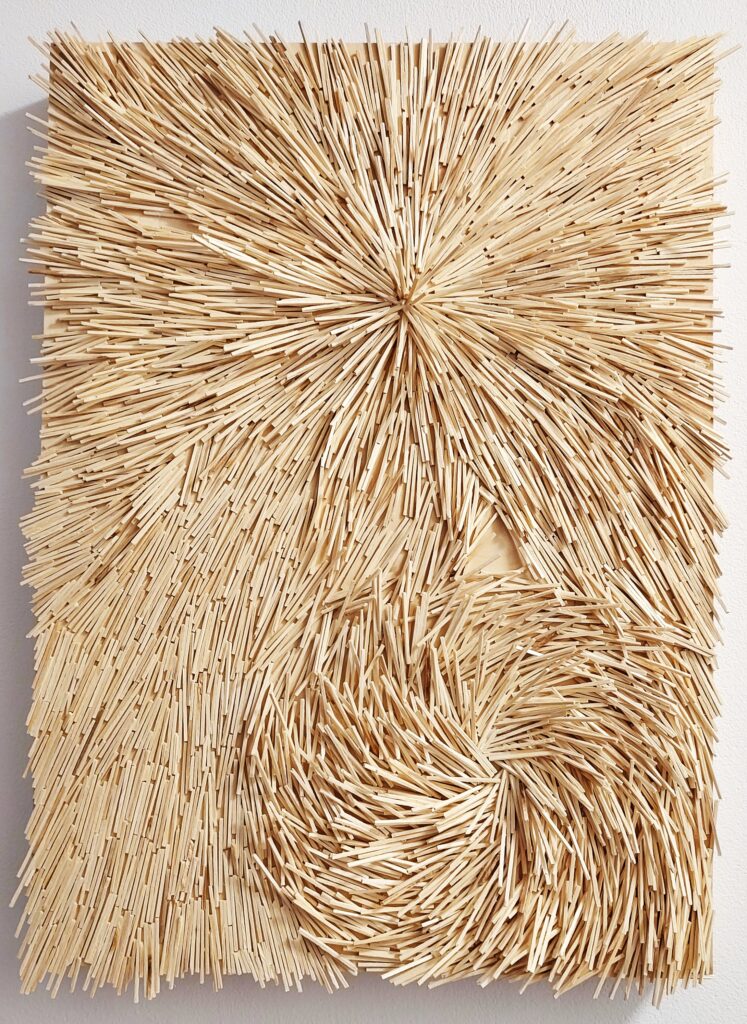
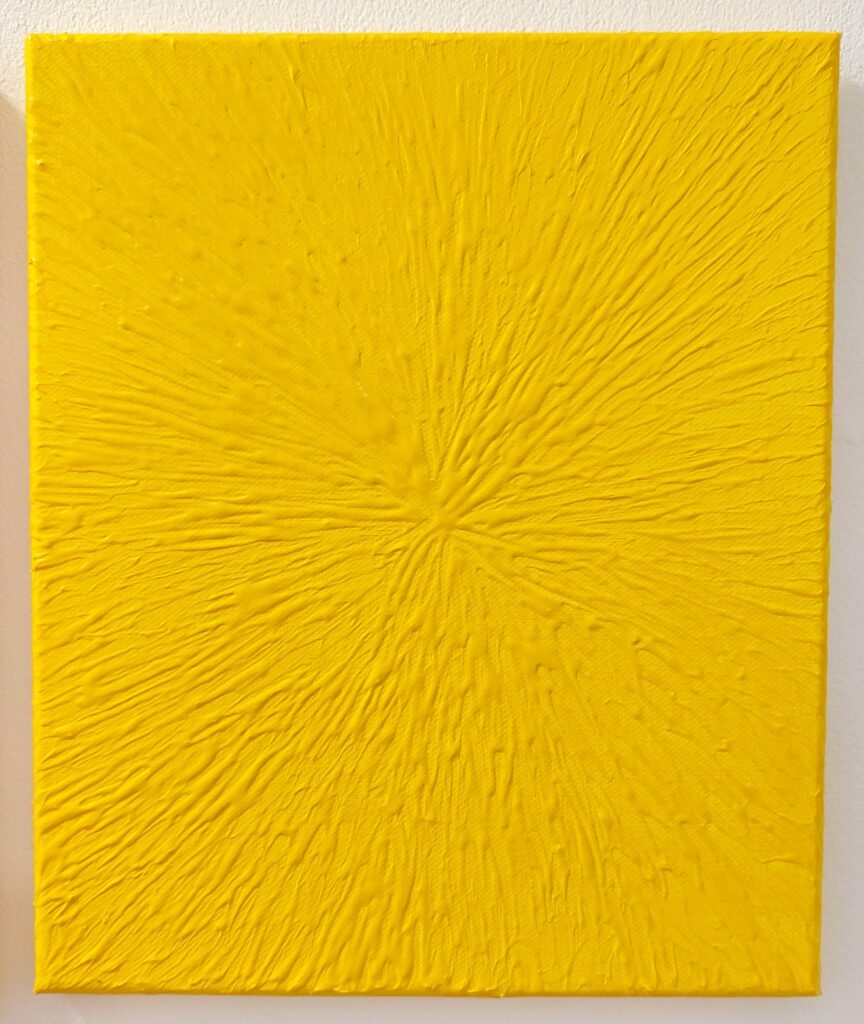
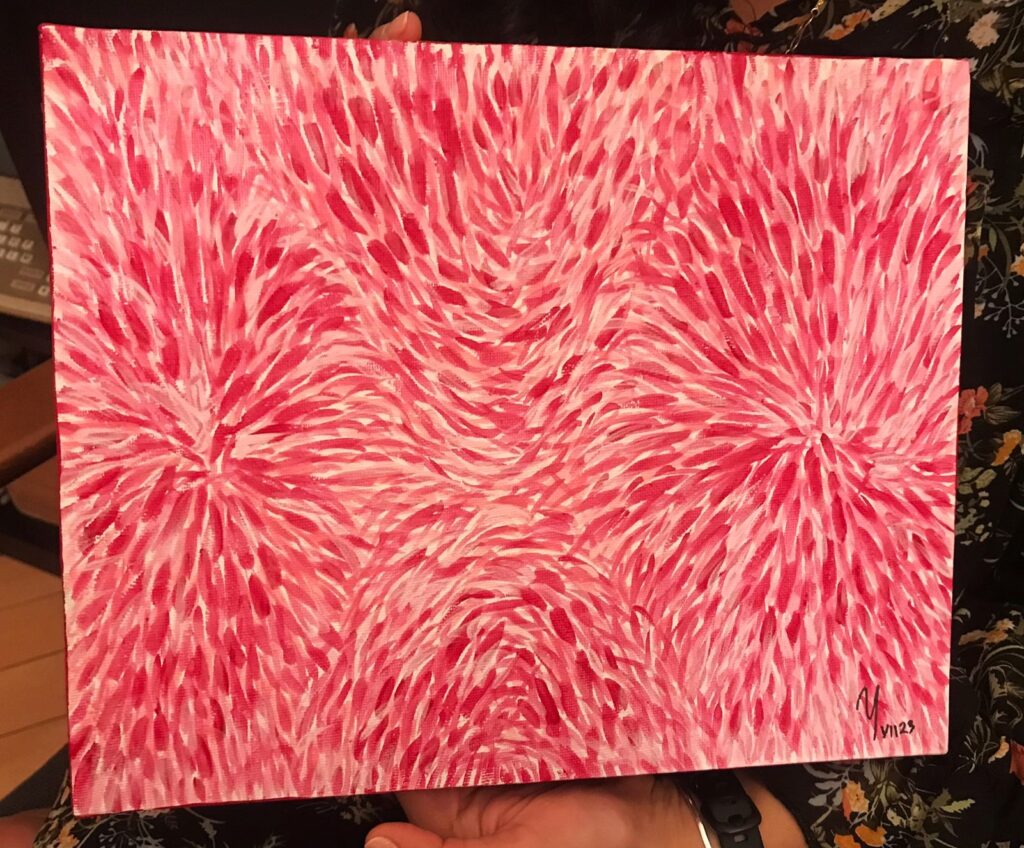
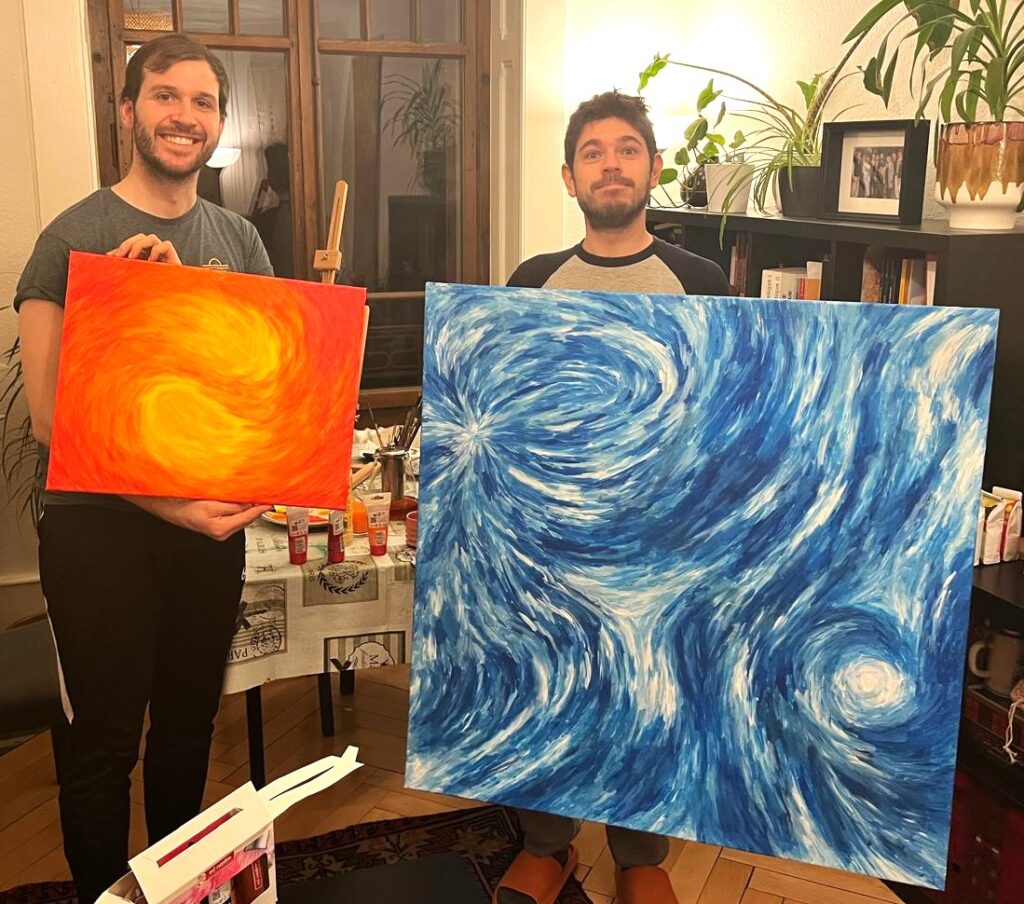
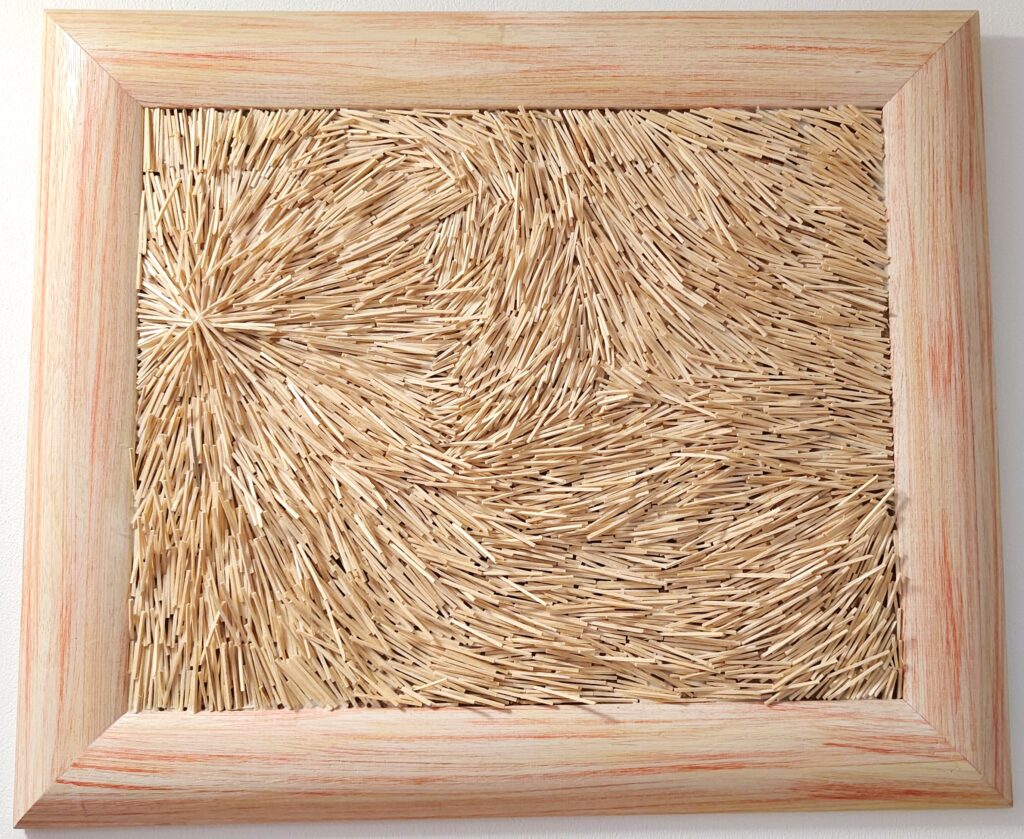
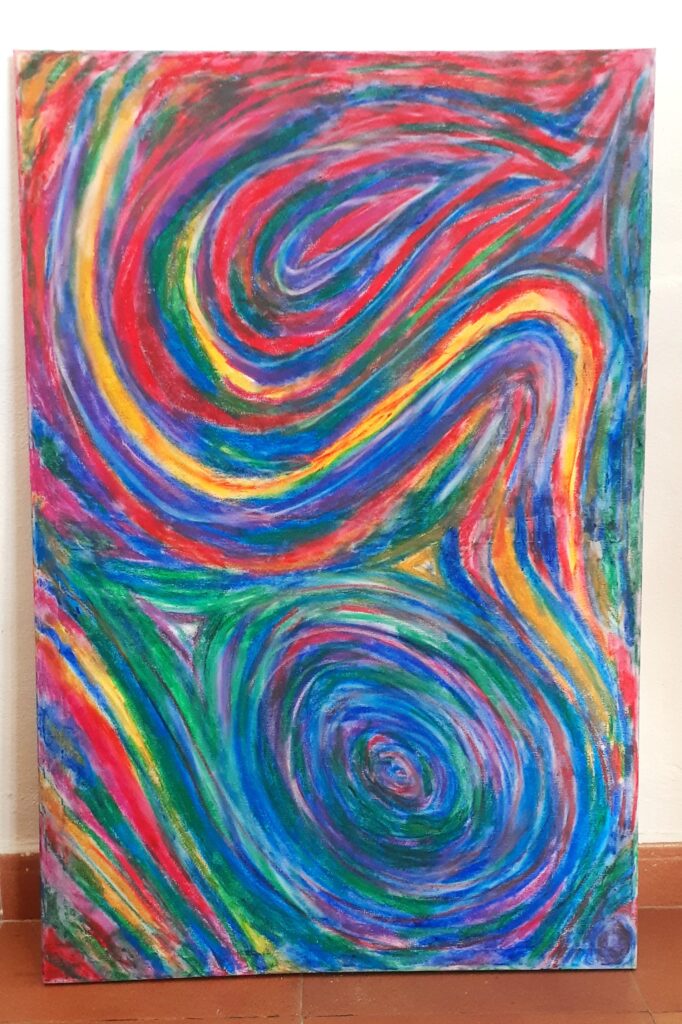
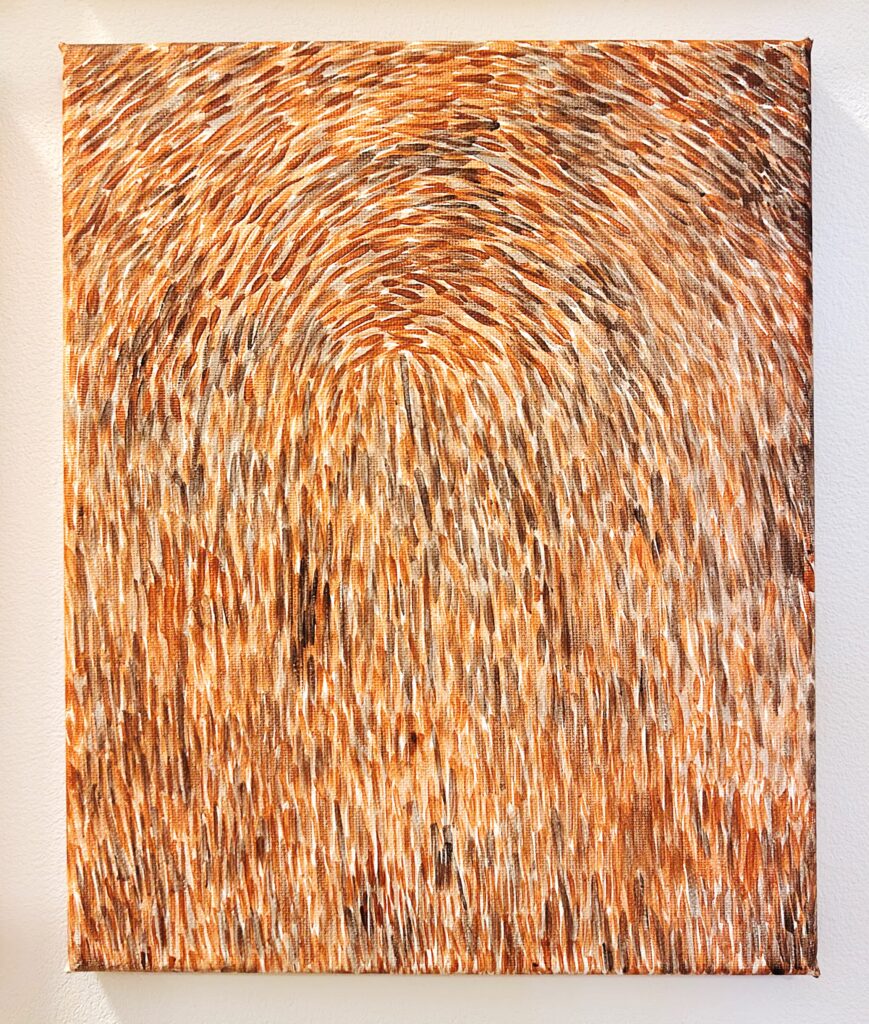
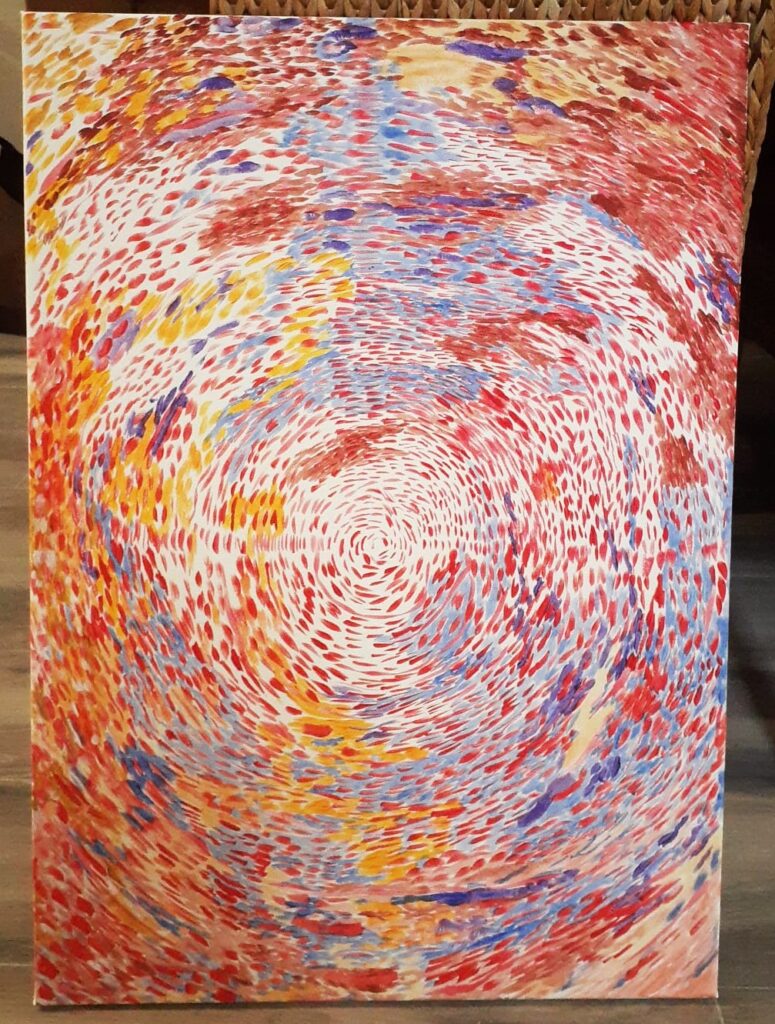
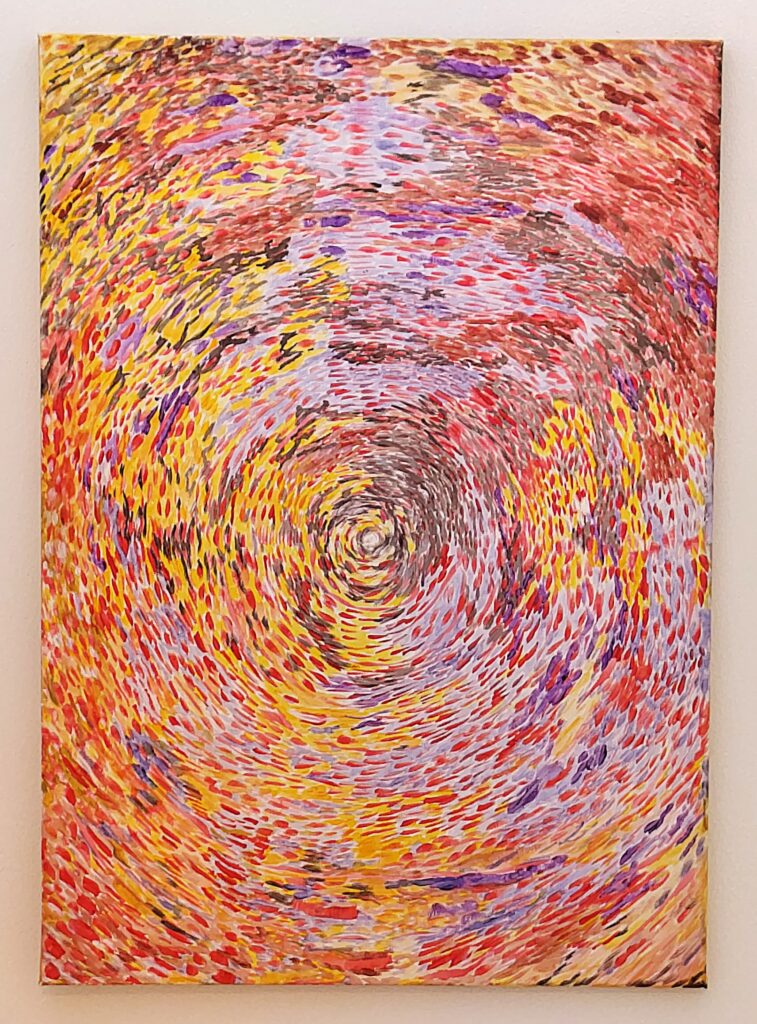
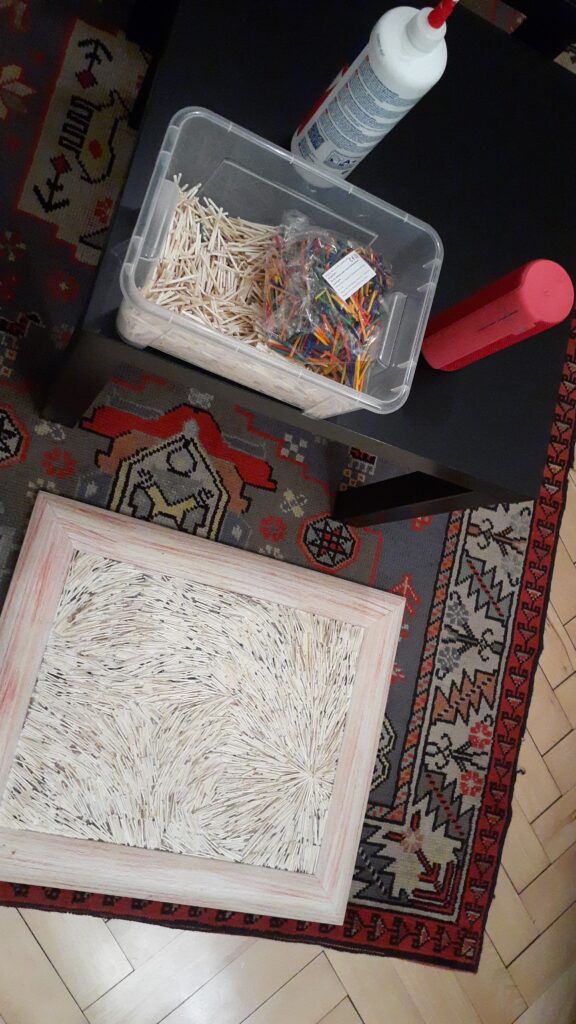
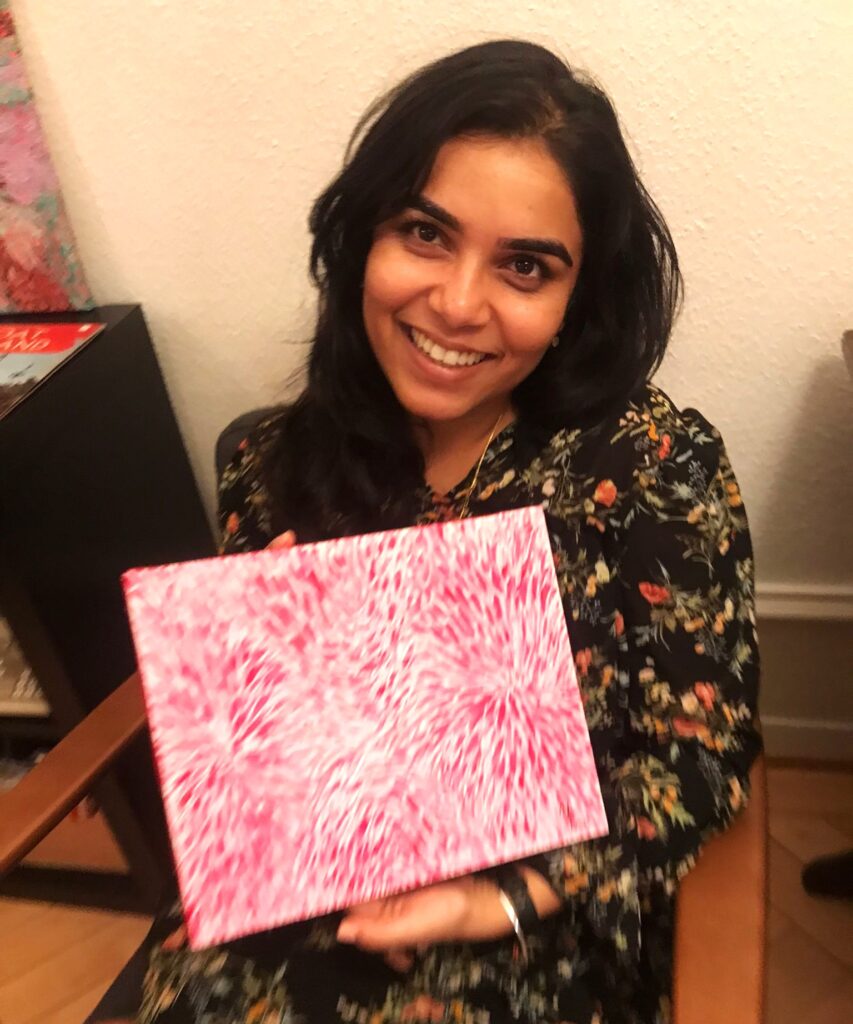
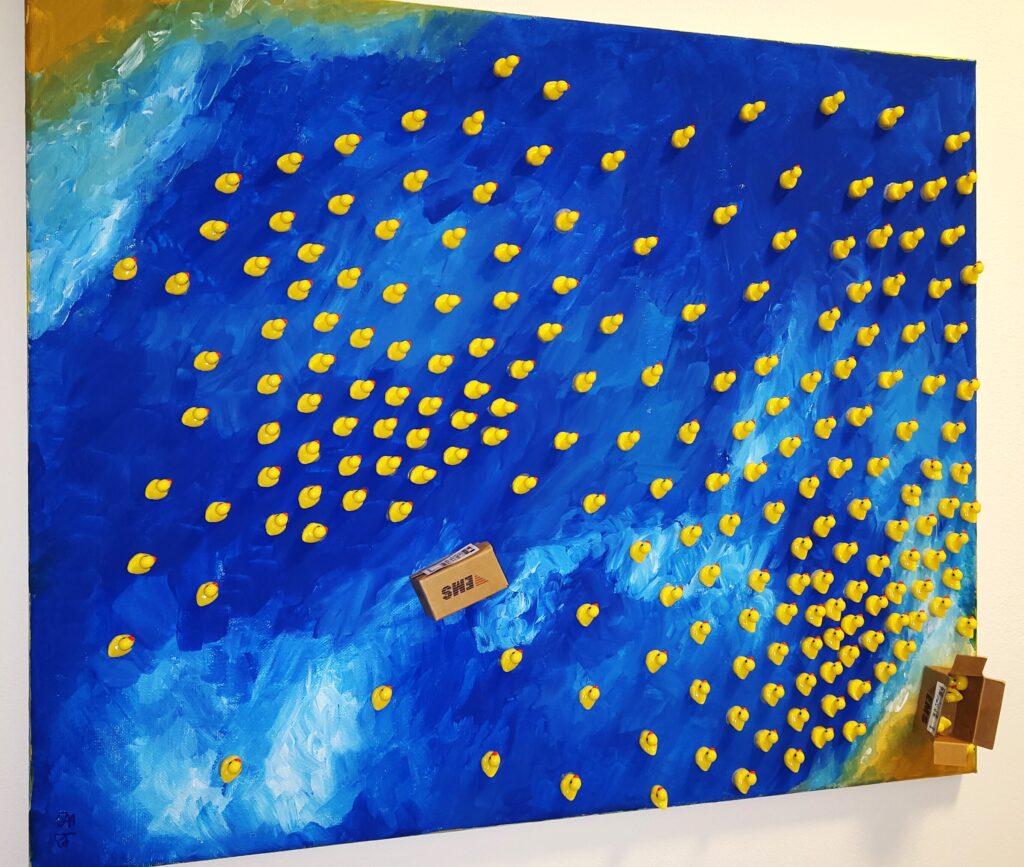
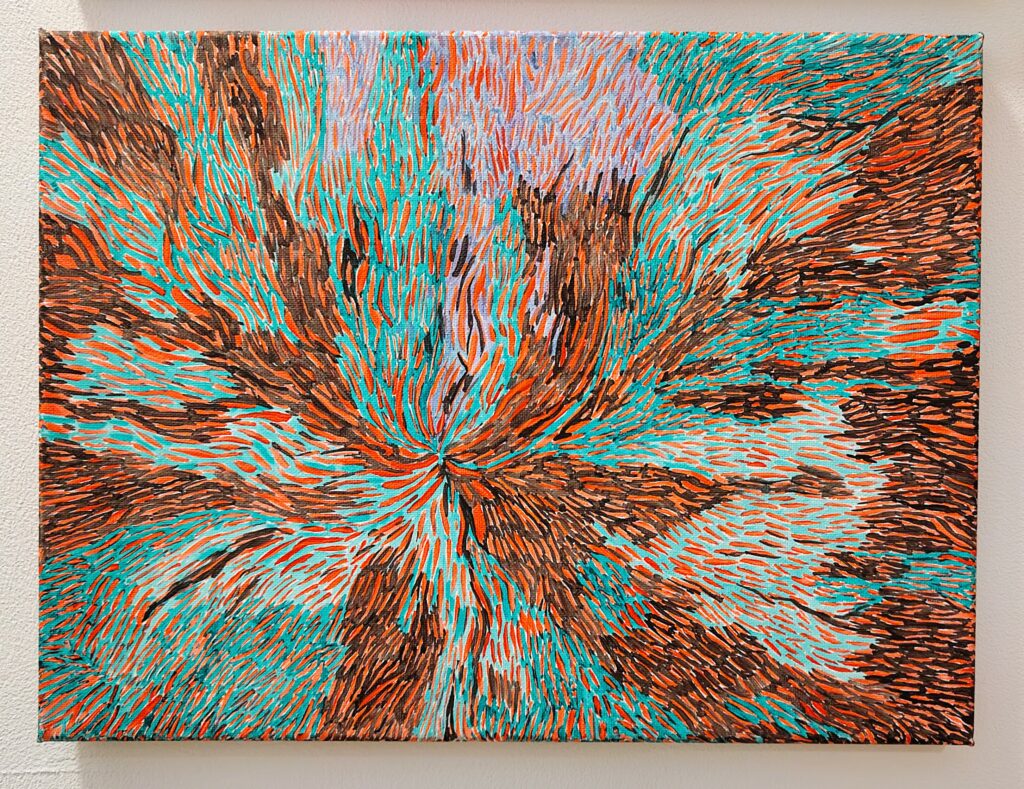
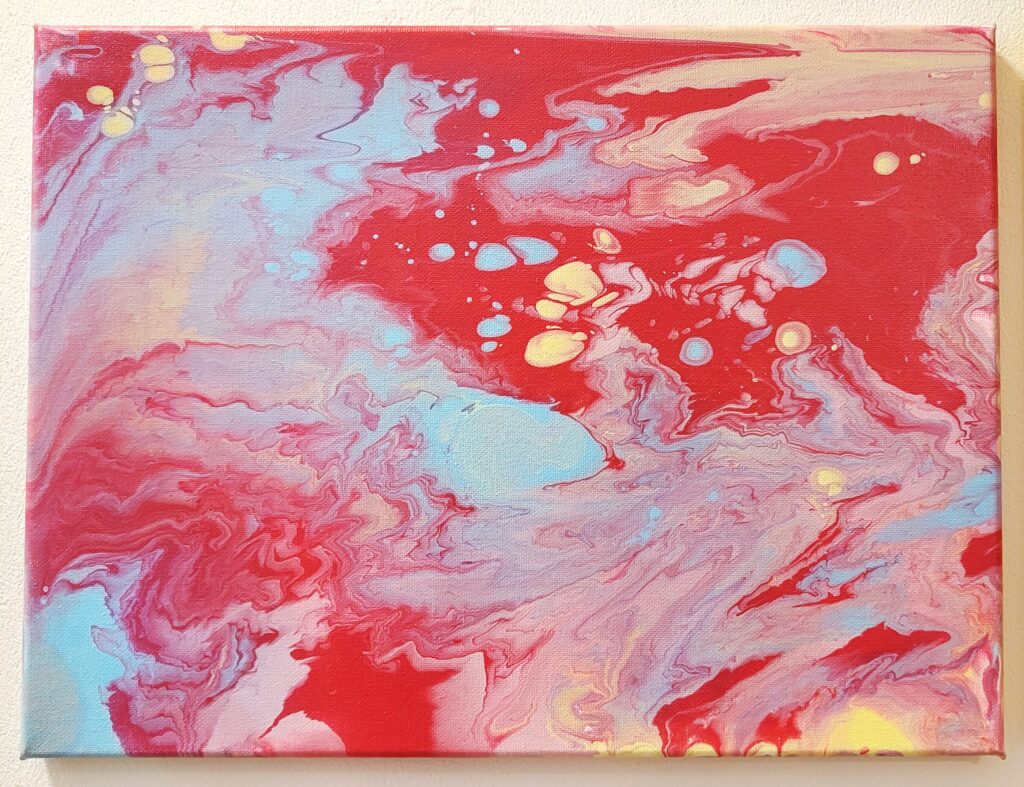
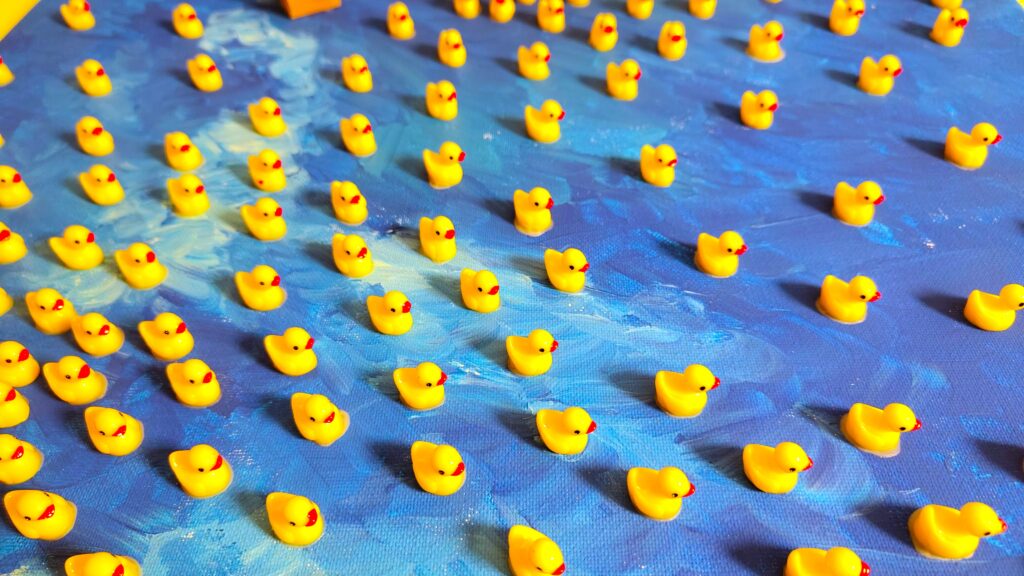
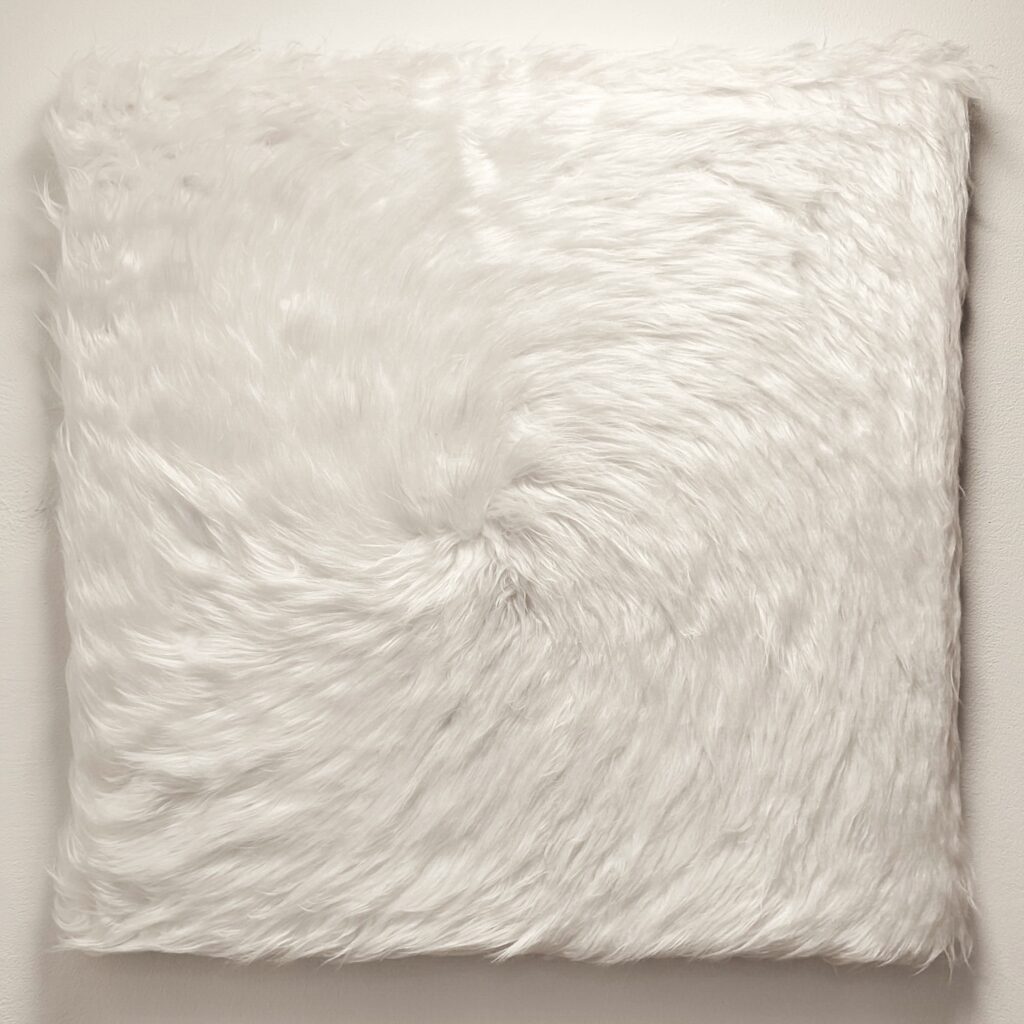
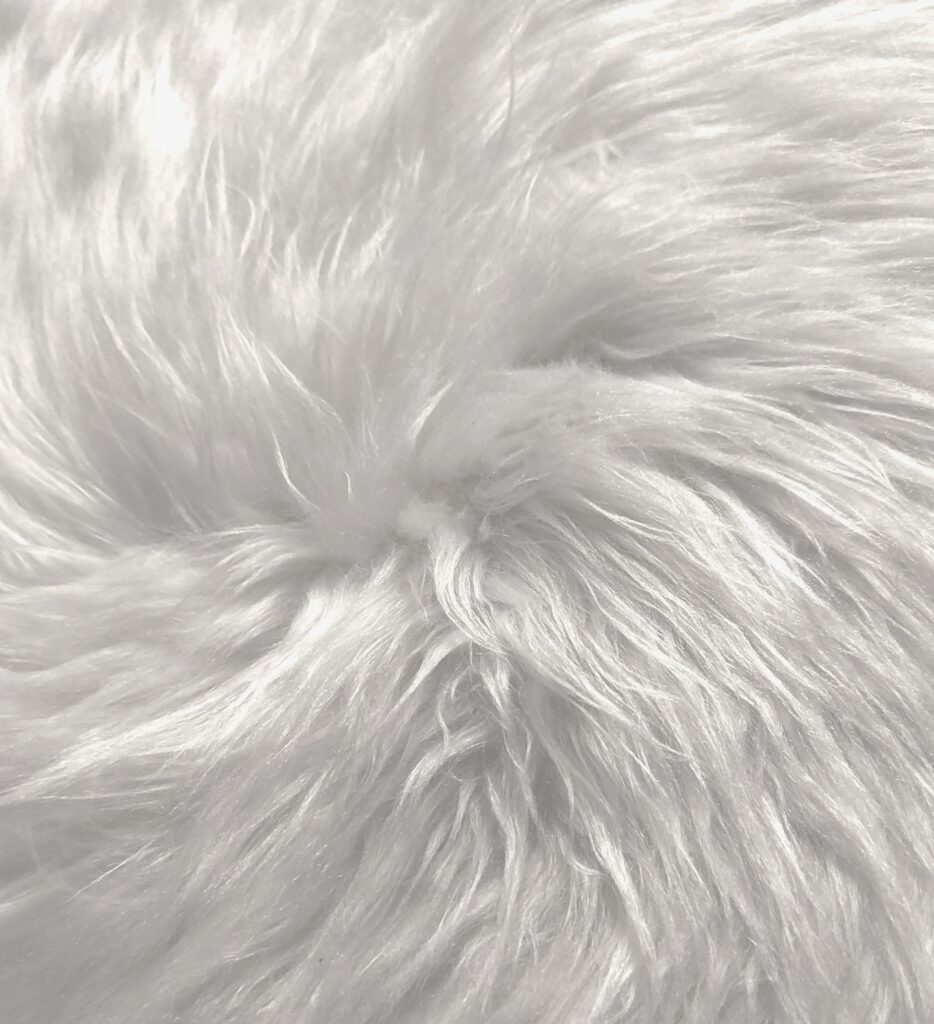
Nematic and hexatic fields built from tiny ducks, wooden sticks, hairy surfaces, and drip paint.
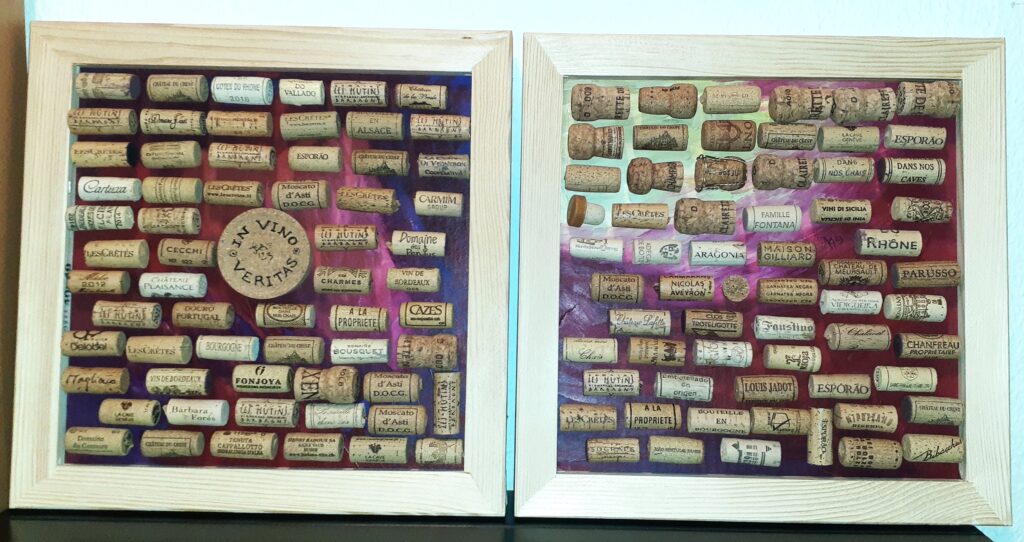
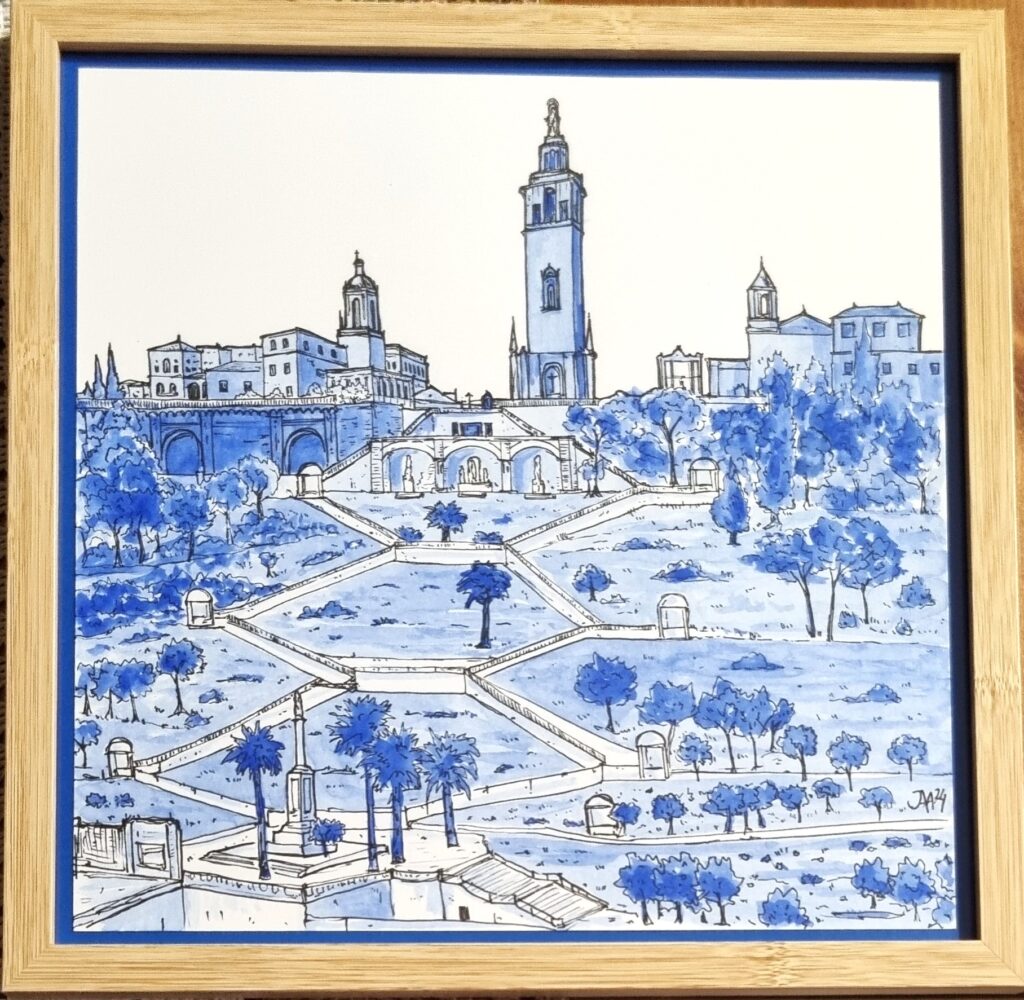
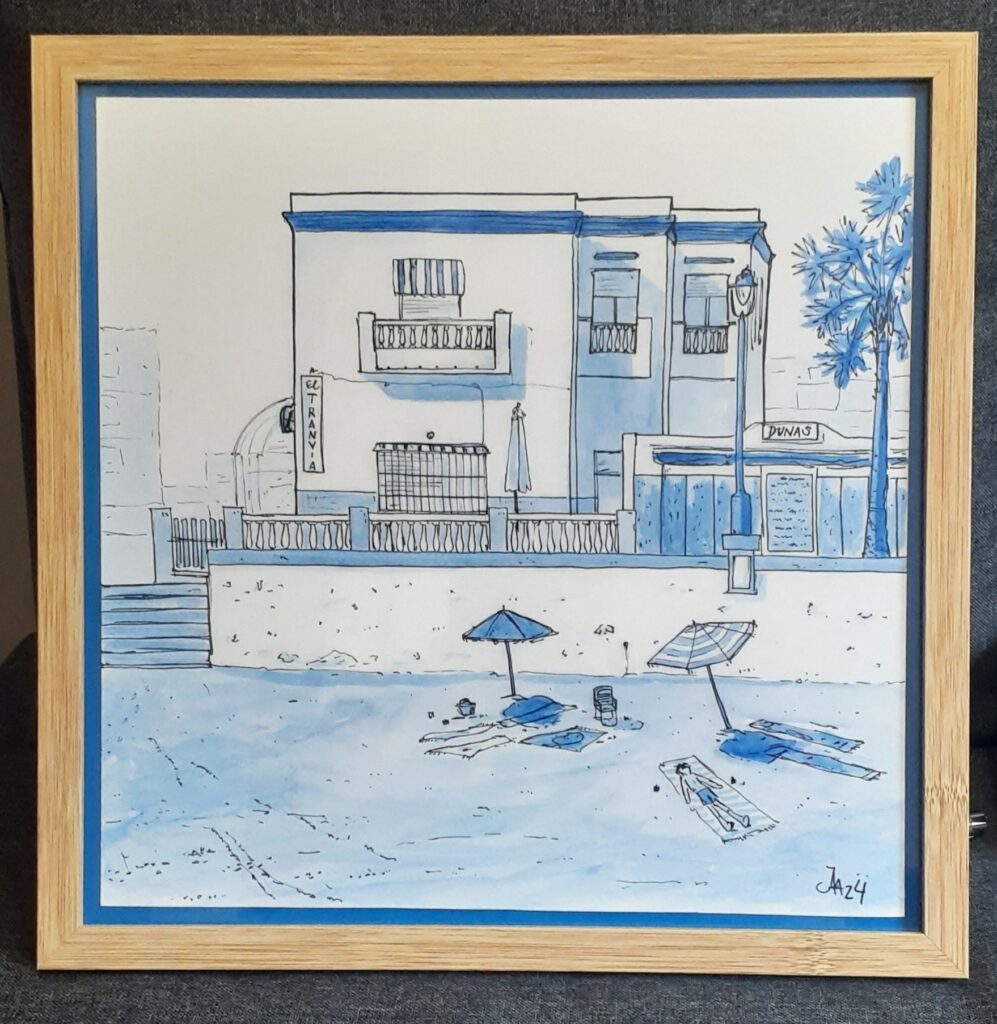
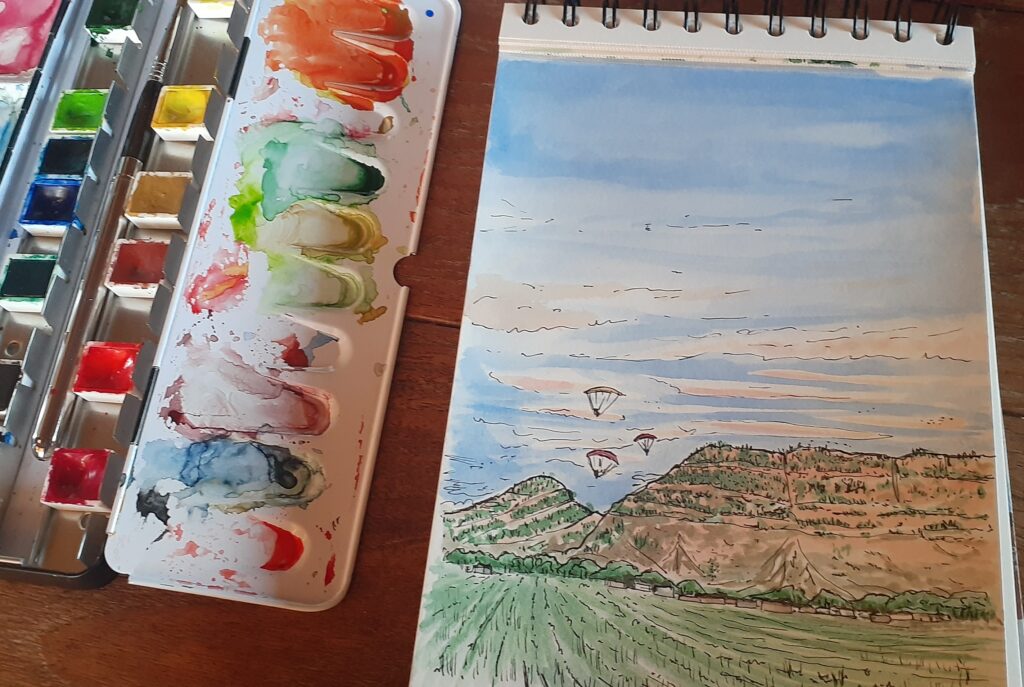
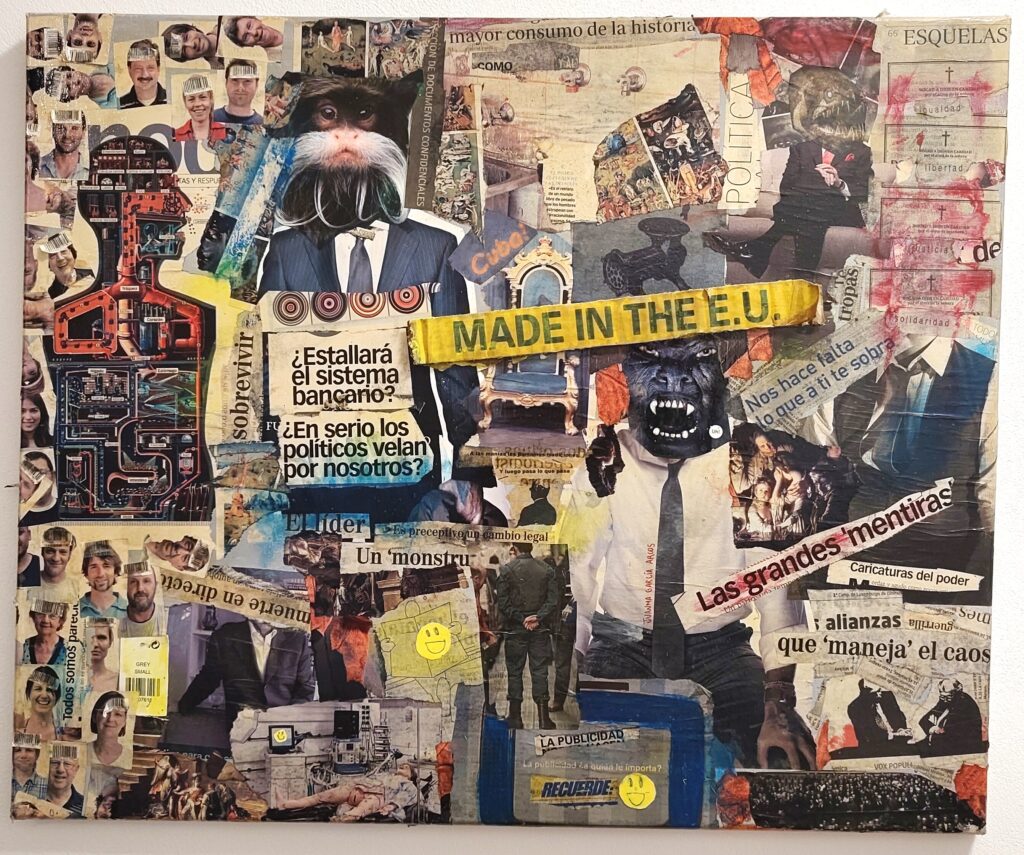
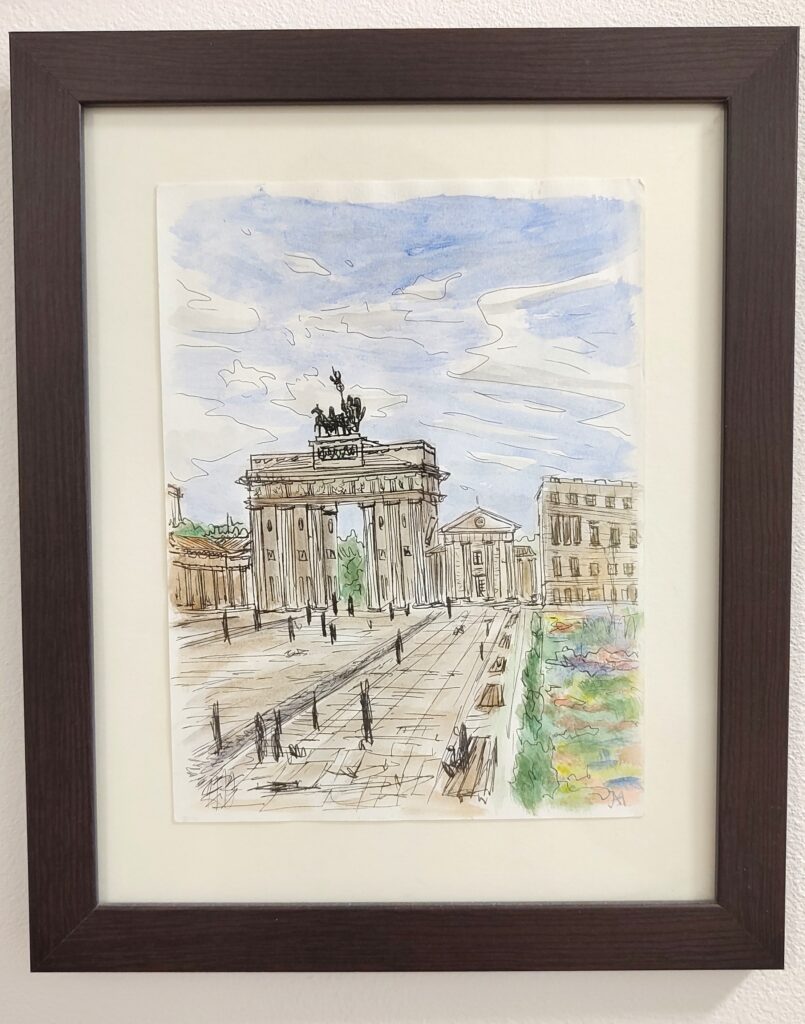
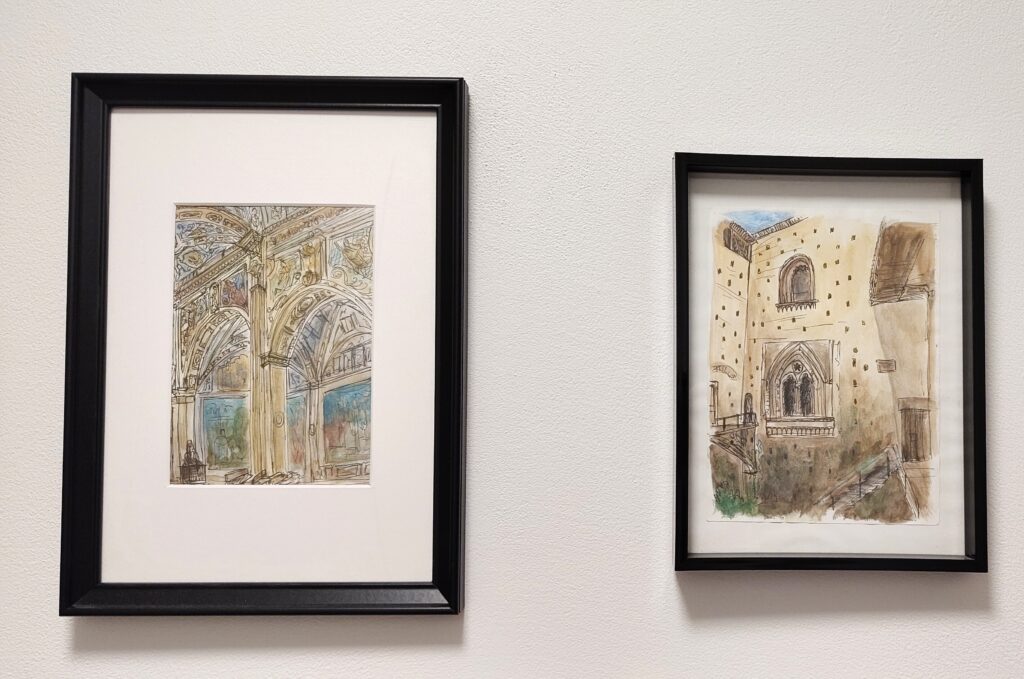
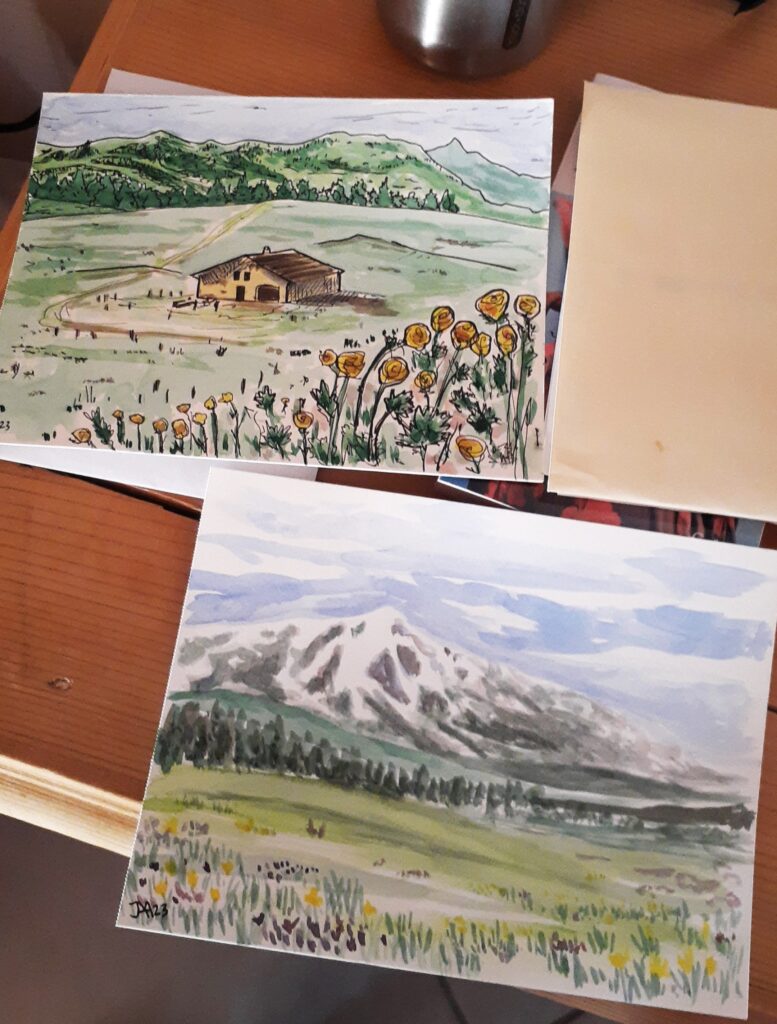
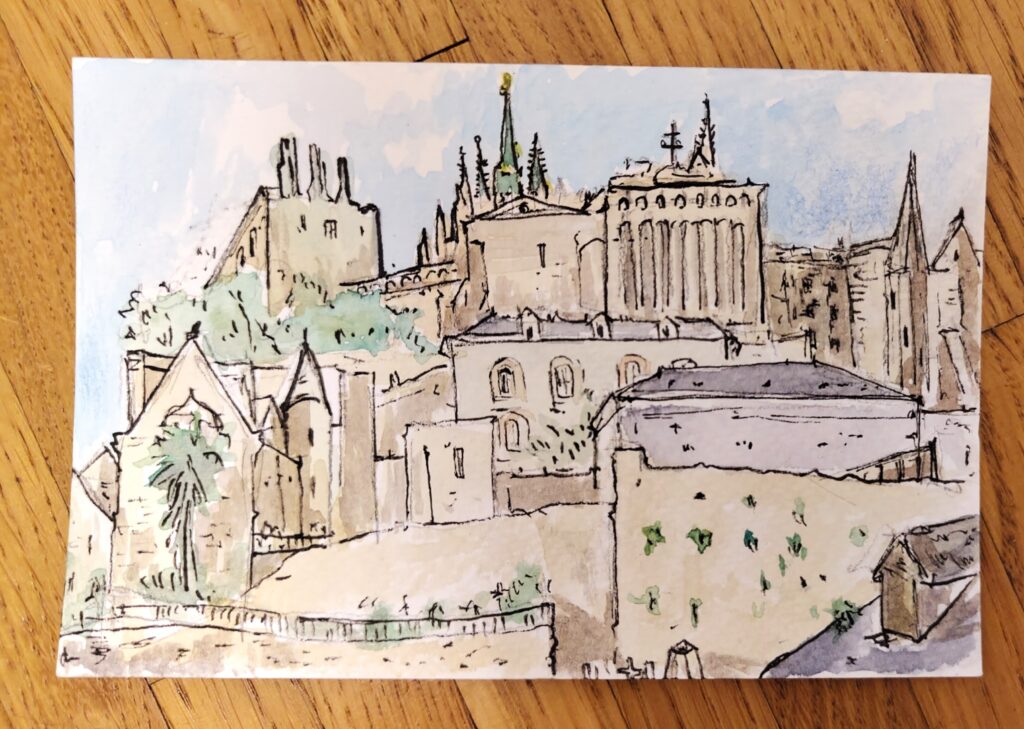
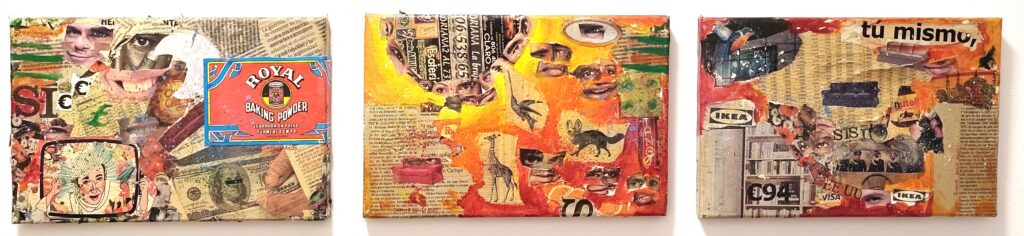
Landscapes and collages
The places, light, and weather I love to paint, at a scale far larger than a cell.
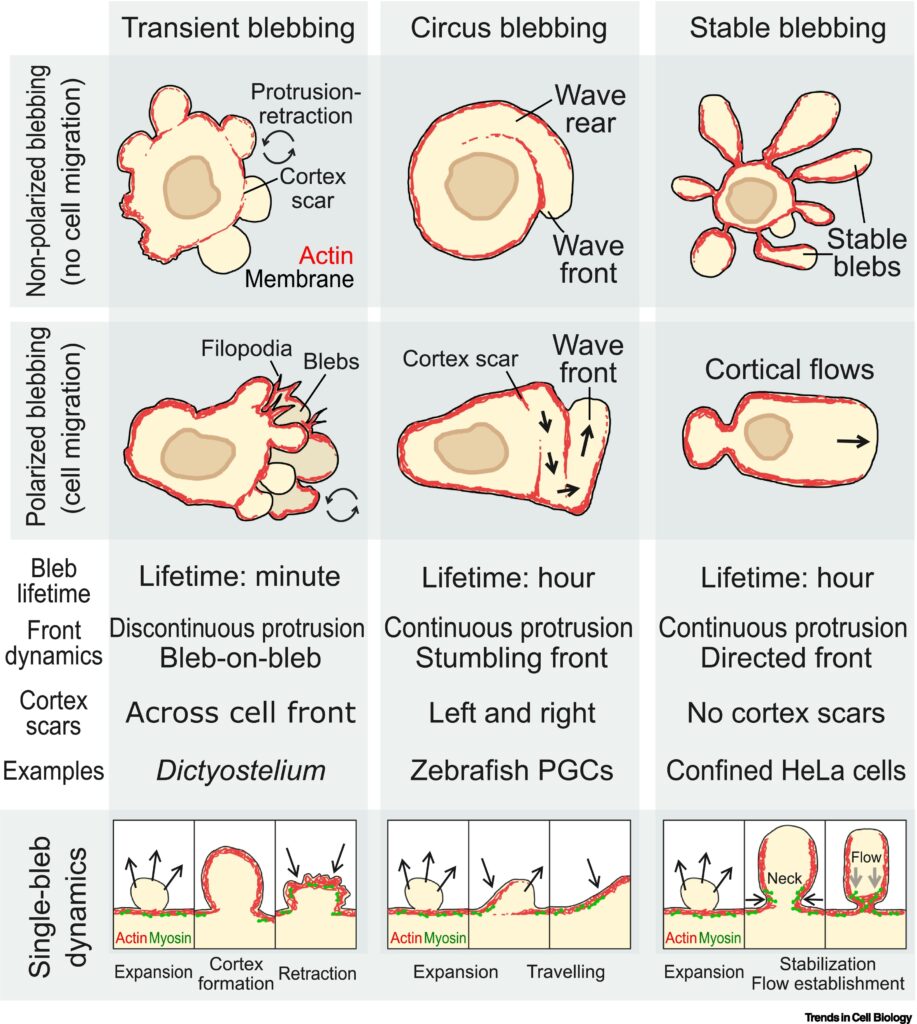
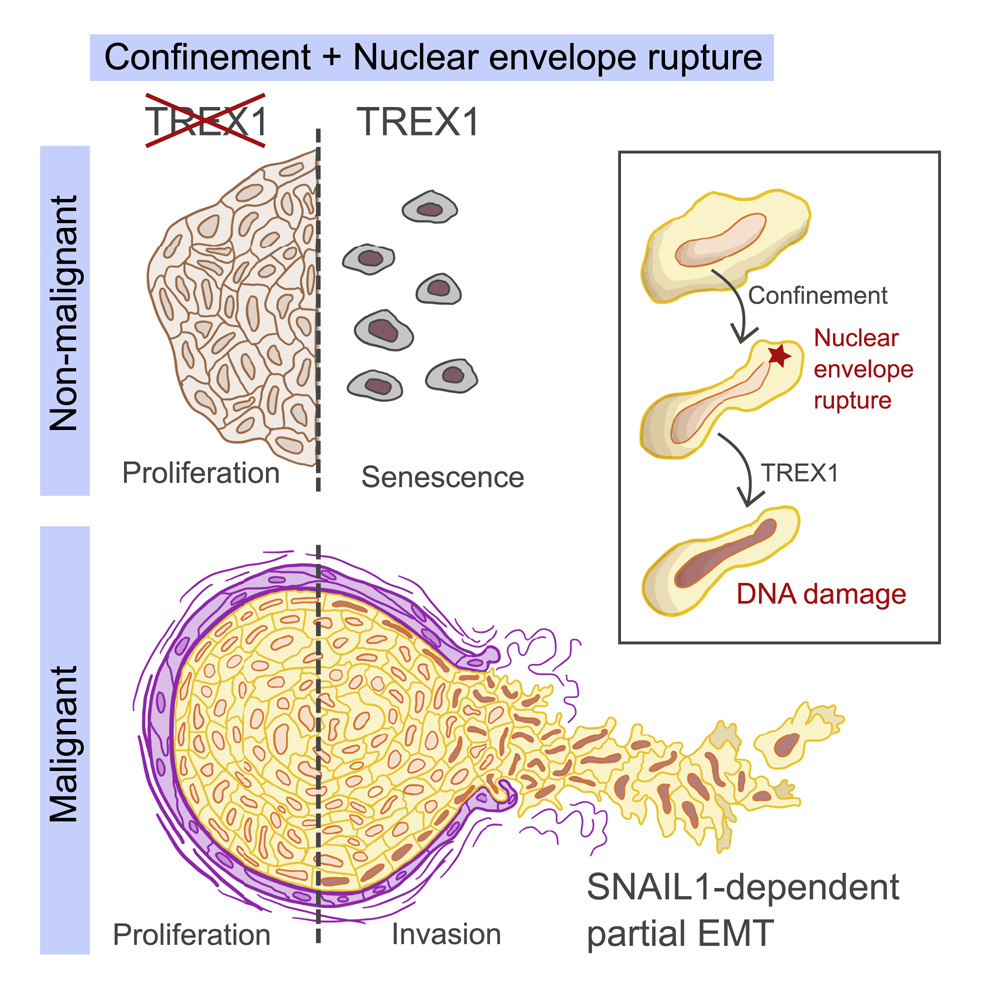
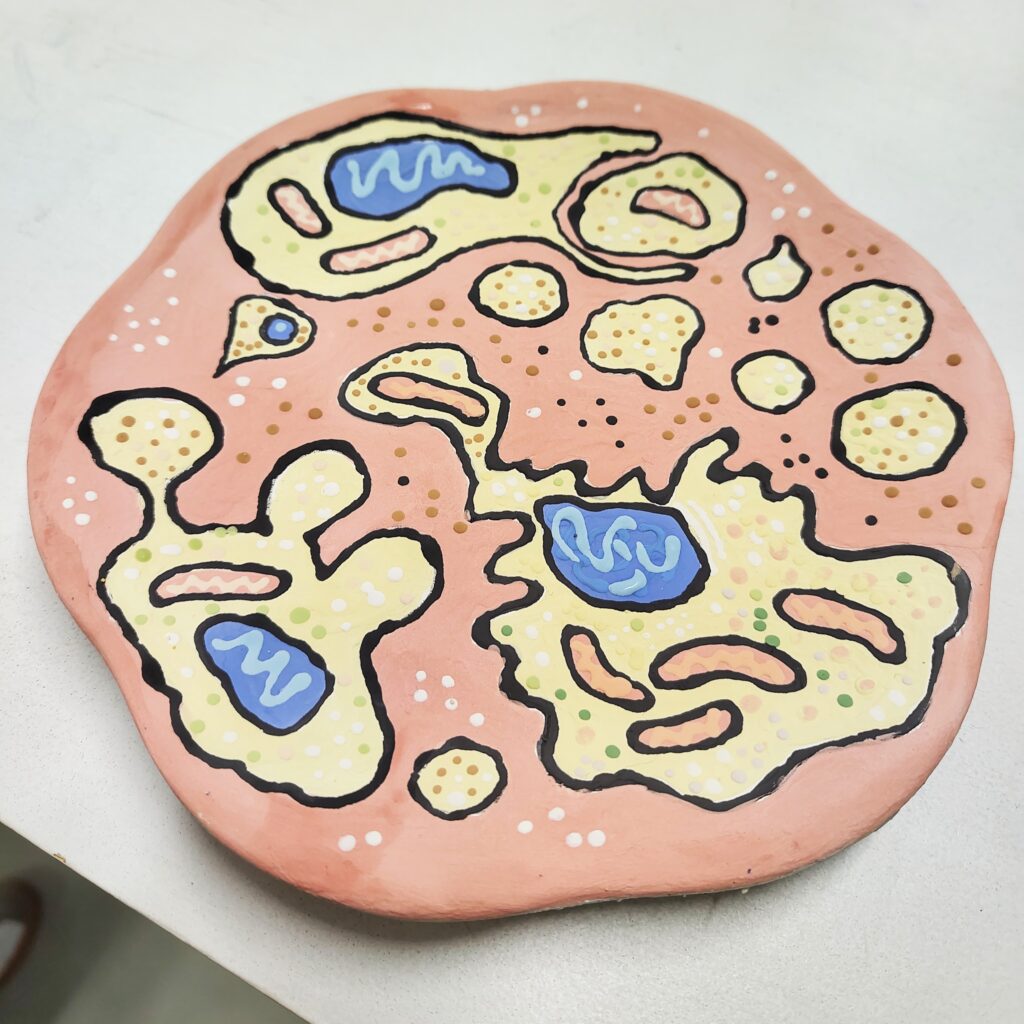
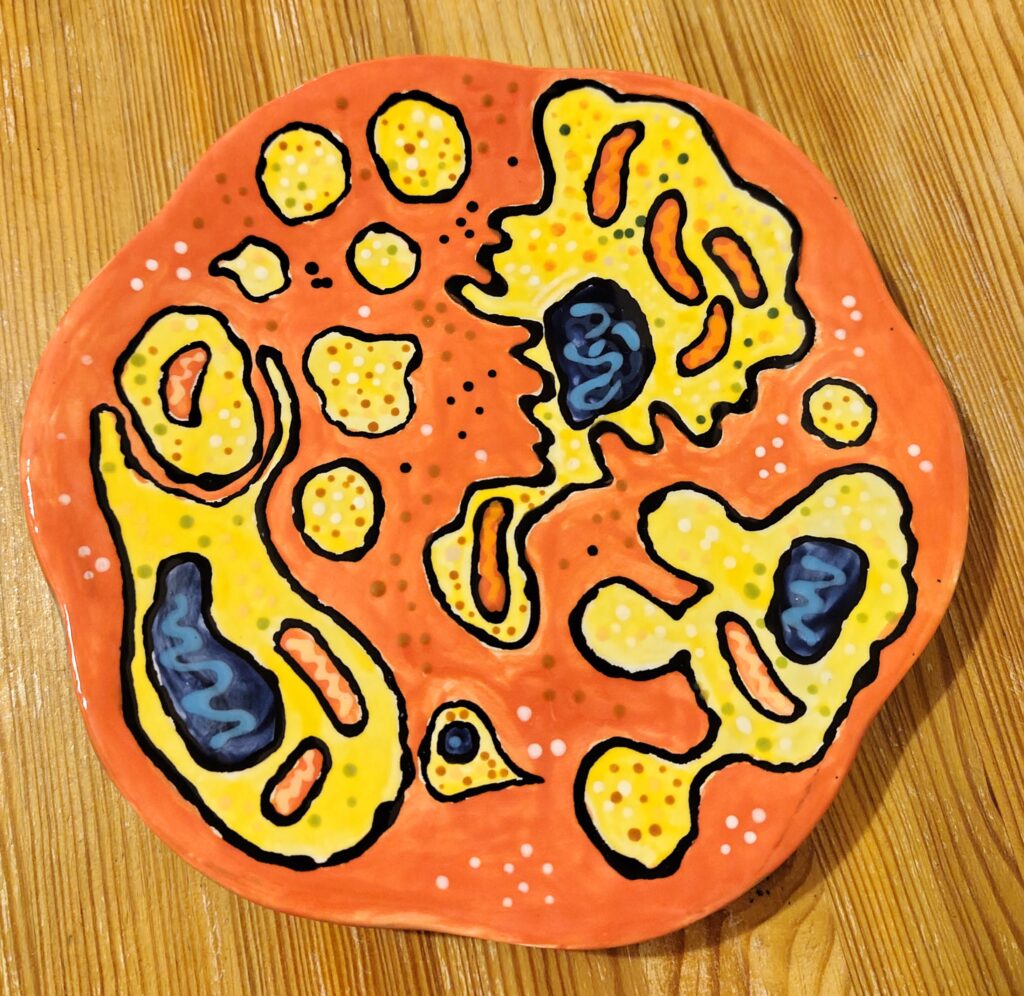
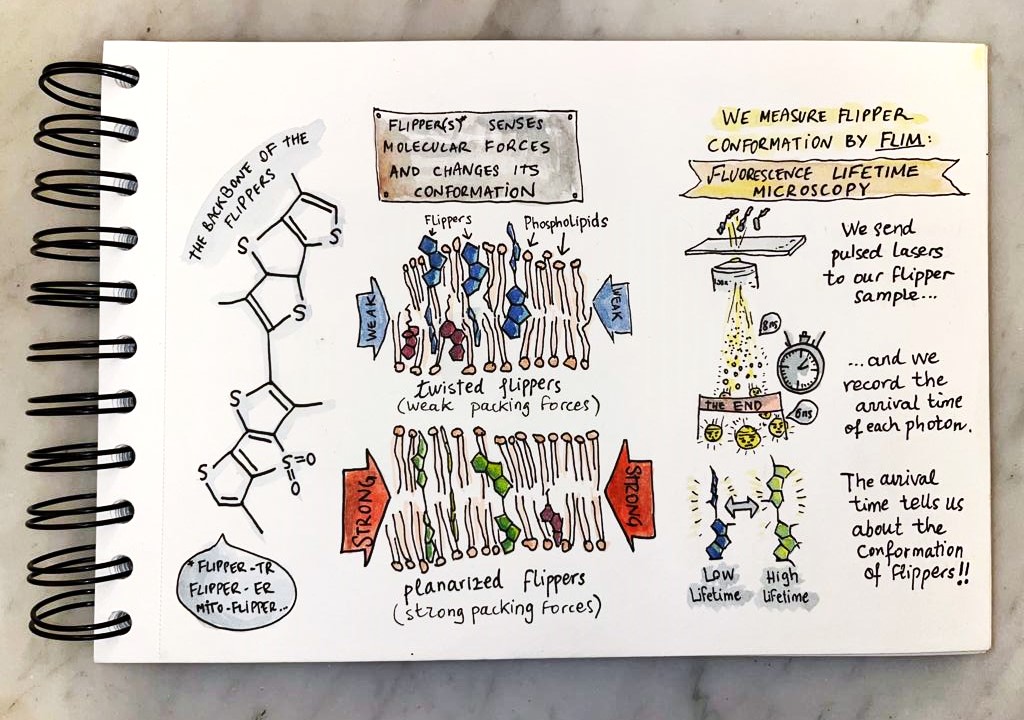
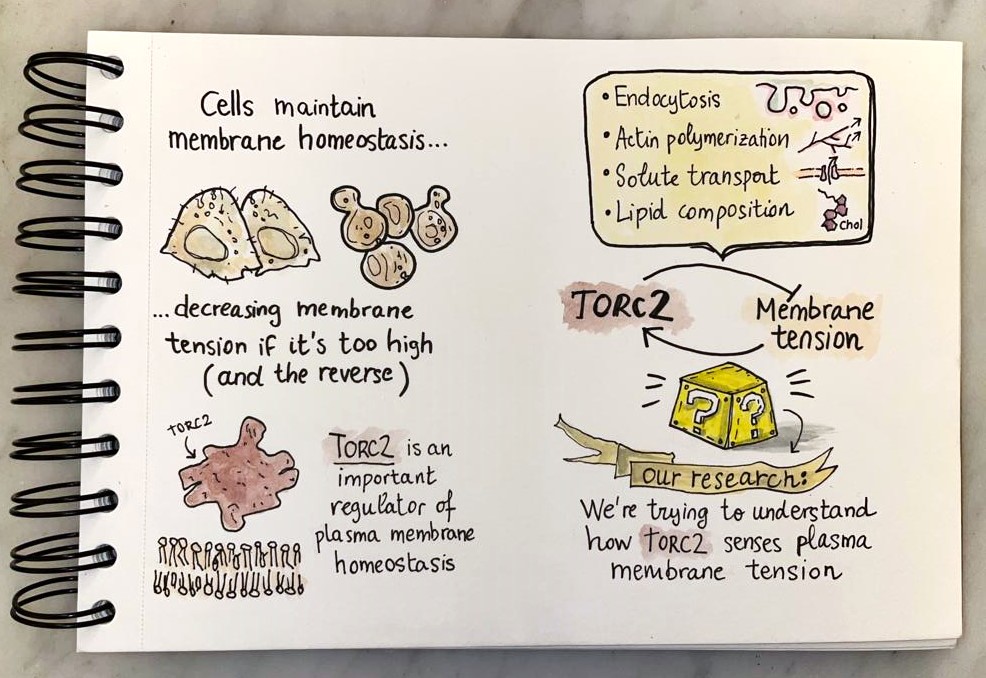
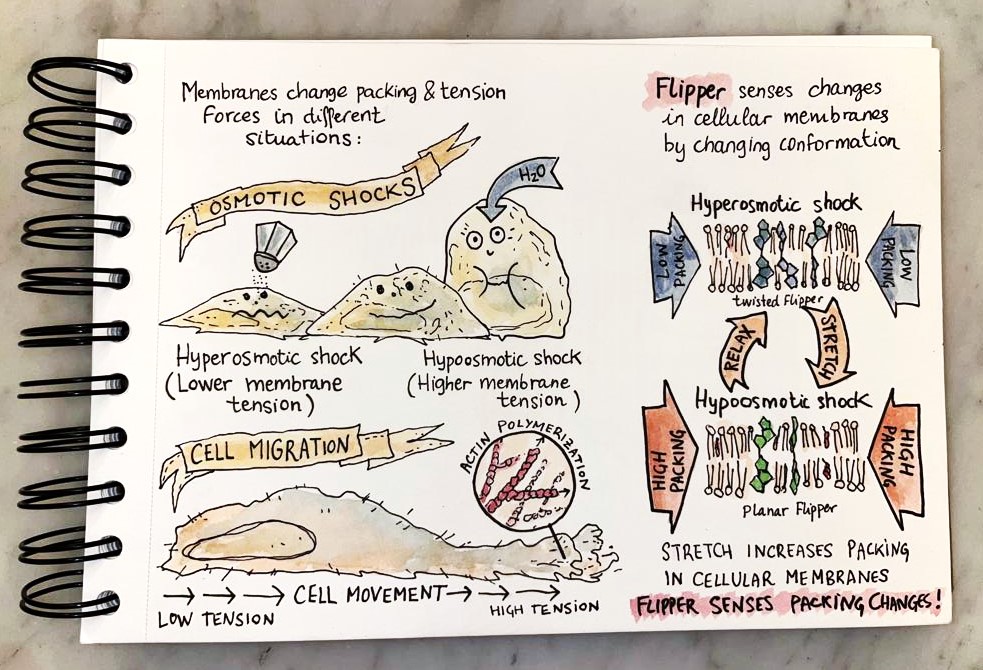
Scientific illustration
Drawings and objects made for my own papers, and for colleagues.
Order in nature: nematic and hexatic fields
The idea
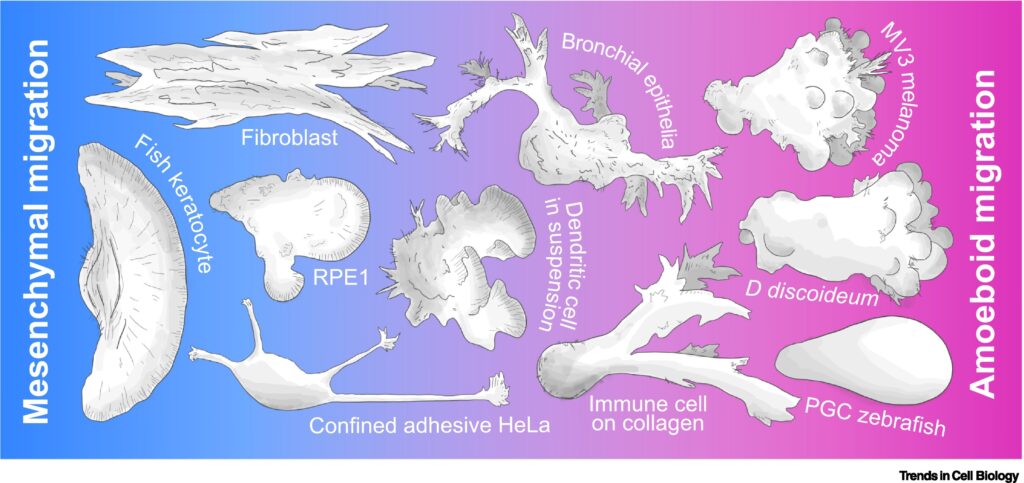
Many systems in nature organize themselves without a blueprint. Cells in a tissue, fibers in the cytoskeleton, and molecules in a liquid crystal align with their neighbors, creating patterns of orientational order that physicists describe as fields.
In a nematic field, elongated elements share a common direction but have no head or tail. In a hexatic field, elements arrange with six-fold order, like a honeycomb. Where the order breaks, topological defects appear: comets and trefoils in nematics, and points with five or seven neighbors in hexatics. In living tissues, these defects can mark the places where cells are extruded or where tissues change shape.
Materials
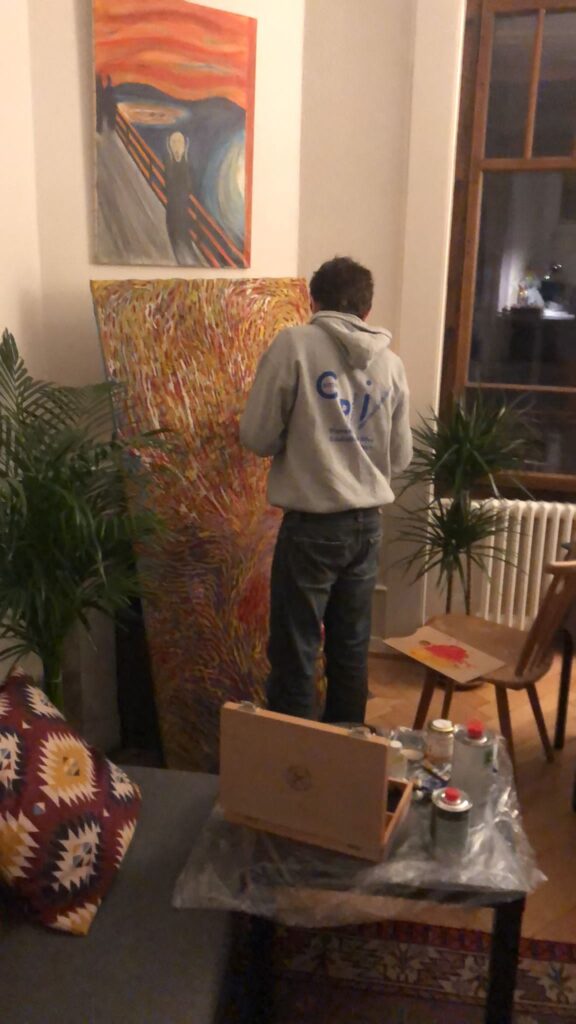
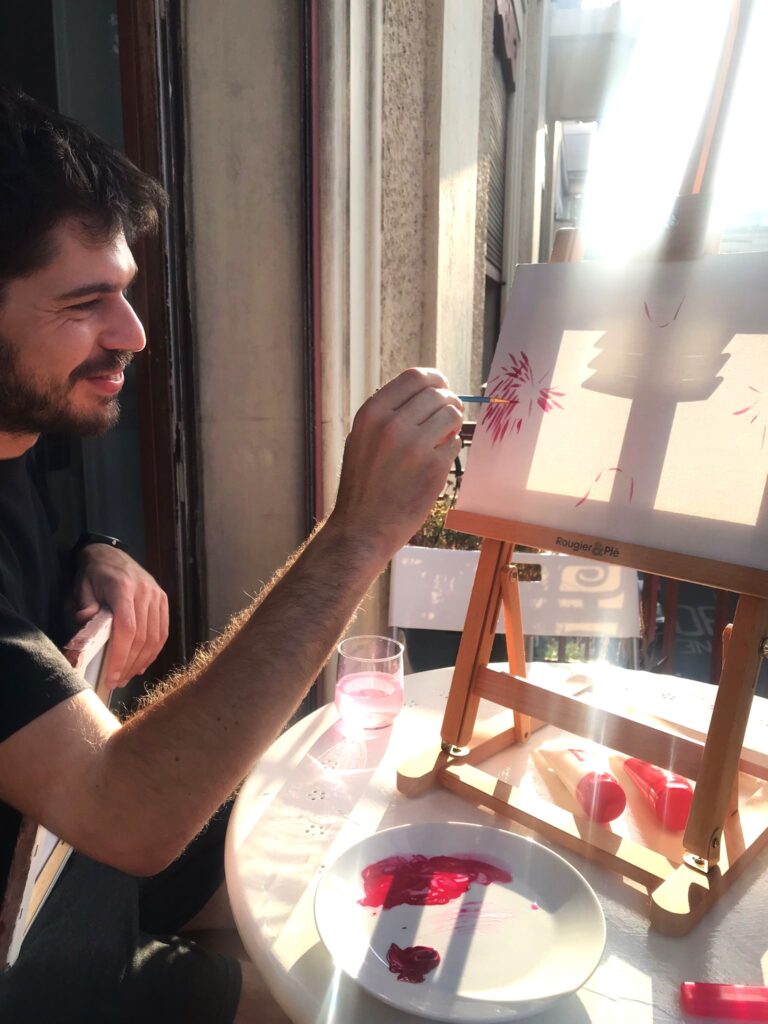
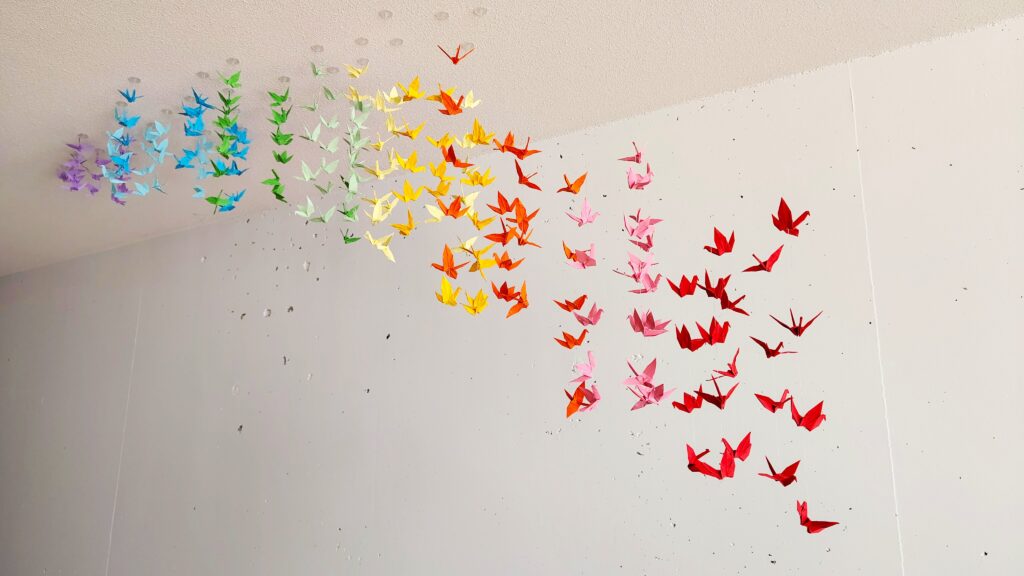
This series tries to make these fields tangible. I have recreated them with tiny ducks, hairy surfaces, wooden sticks, monochrome and multicolor canvases, textures, and drip paint. Each material forces a different way of showing alignment, and each one reveals something new about how order looks and feels.
Inspiration
This work was inspired by Peter Friedl and shaped by many conversations during my postdoc, particularly with Claire Desalles, Oriel Mane, and Yamini Ravichandran, and with my postdoc advisor Aurélien Roux.
Landscapes and collages
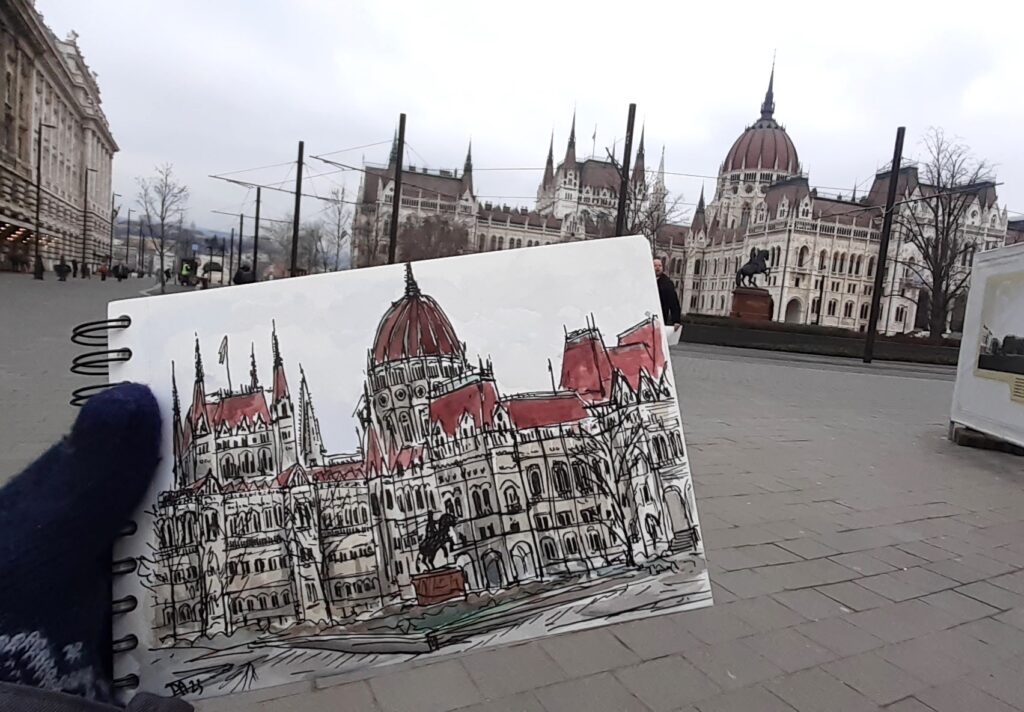
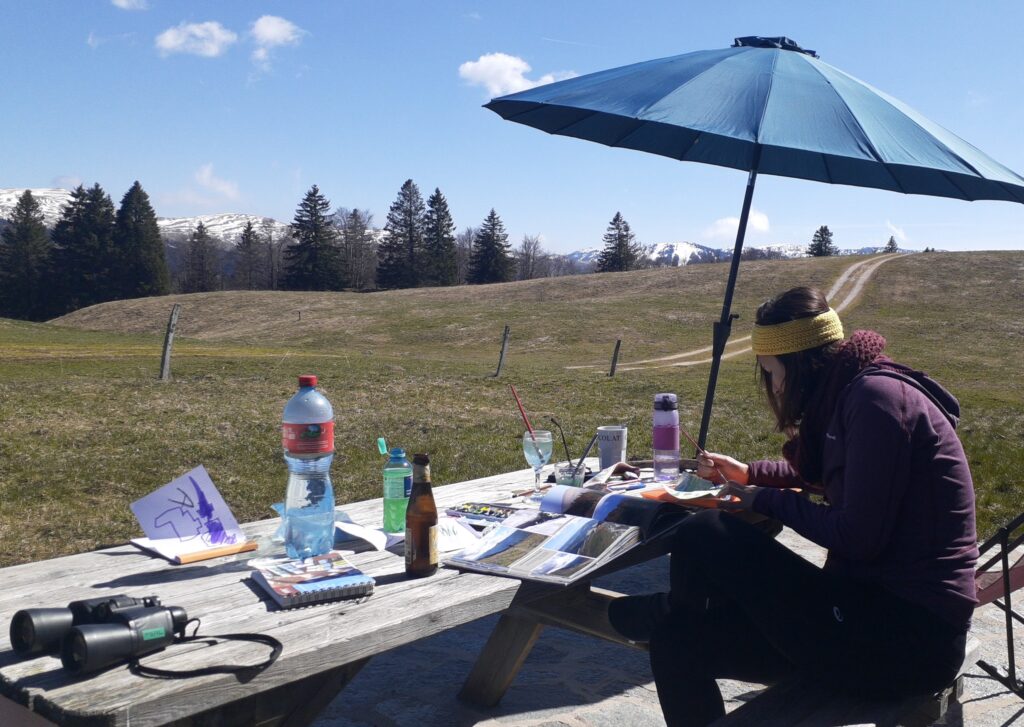
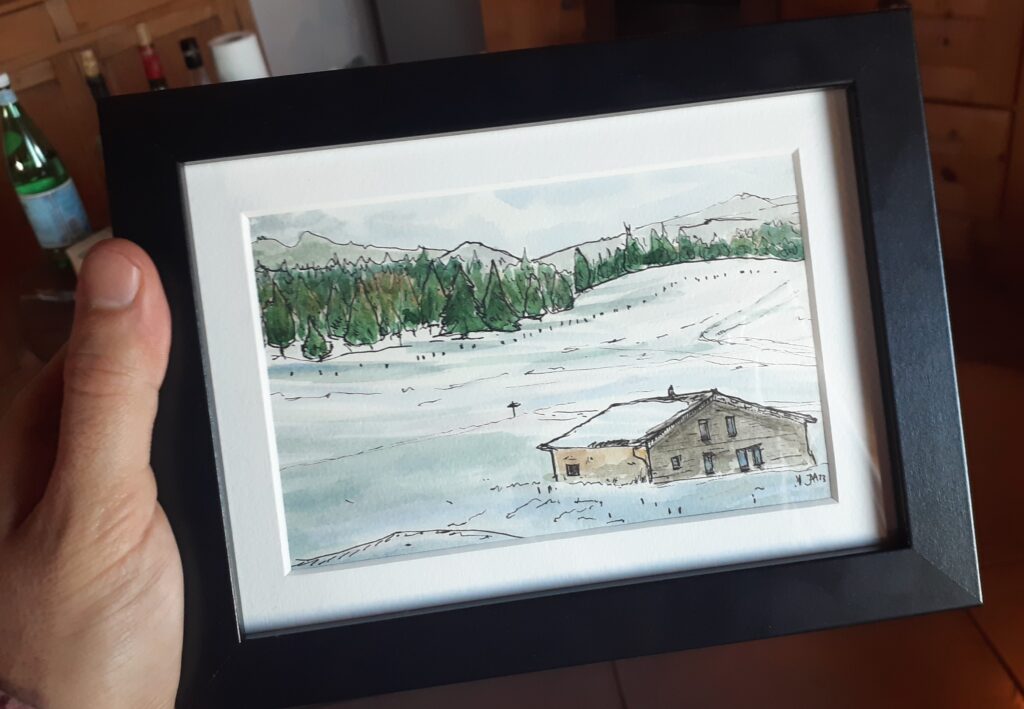
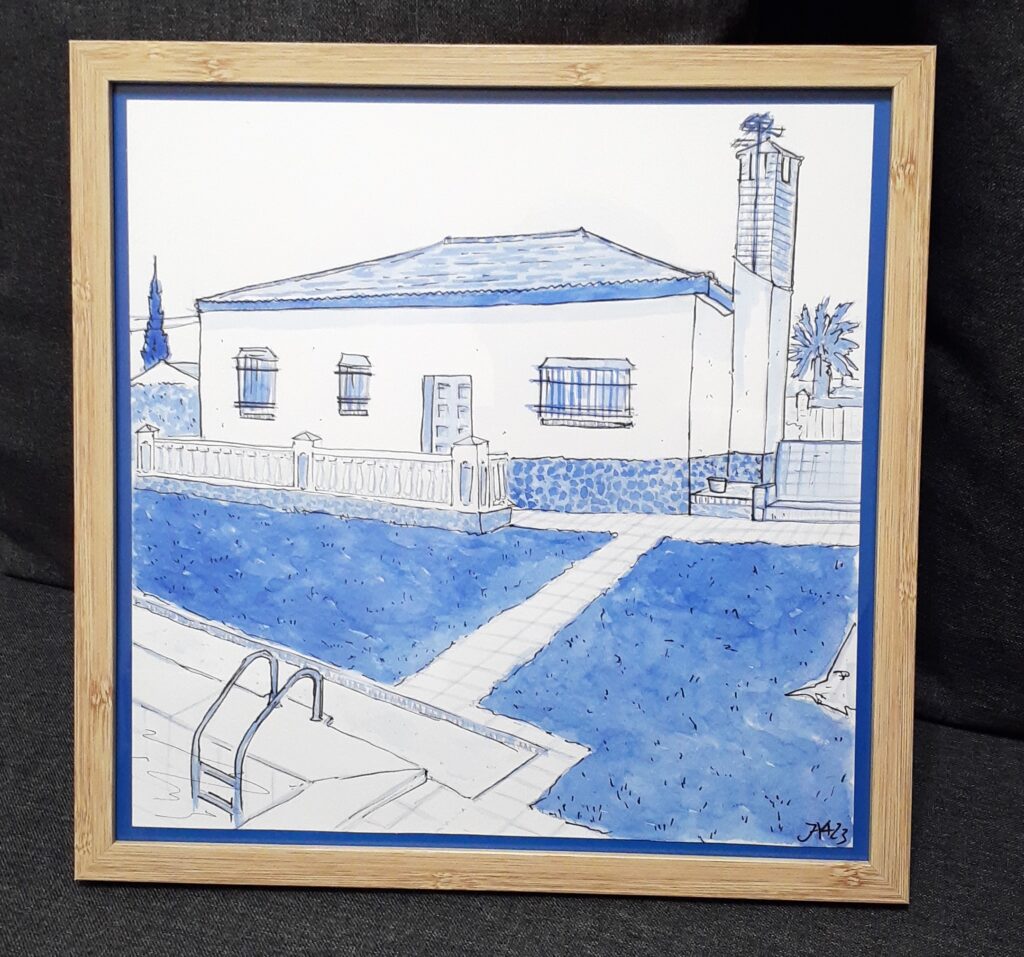
I paint landscapes often, simply because I enjoy it. After days of looking at cells under the microscope, it is a way to look at the world at a completely different scale: light, weather, and the shape of the land.
Scientific illustration
I make scientific illustrations for my own papers and reviews, and for colleagues who need a figure that explains an idea at a glance. Drawing a mechanism is also a way of understanding it: to draw a process clearly, you first have to know exactly how it works.